






The Impact of Policy Changes on Outdoor and Transit Advertising Formats is reshaping visibility, compliance, and media planning.

The Impact of Policy Changes on Outdoor and Transit Advertising Formats

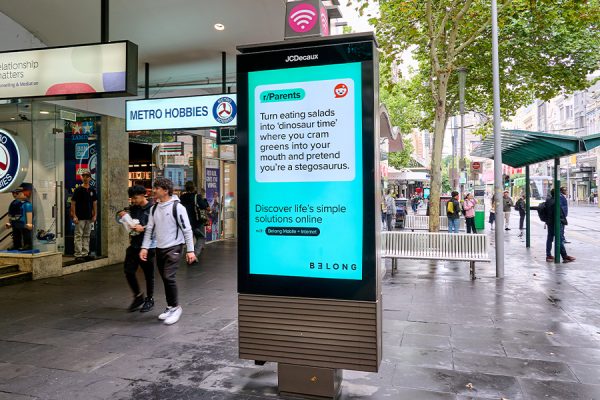
The outdoor advertising industry has always evolved alongside urban development. However, in recent years, the impact of policy changes on outdoor and transit advertising formats has become far more significant. Governments and local authorities are introducing new regulations to improve city aesthetics, ensure commuter safety, and promote sustainable advertising practices. As a result, advertisers, media…

Read More
Why brand consistency matters more than virality in 2026 as trust, recall, and long-term brand growth take priority.

Why Brand Consistency Matters More Than Virality in 2026

For much of the past decade, virality dominated marketing conversations. Brands chased trending formats, short-term spikes, and social media moments designed to capture fleeting attention. While viral success delivered reach, it often failed to deliver lasting brand value. As 2026 approaches, marketing priorities are shifting. In an environment defined by fragmented attention, algorithm-driven distribution, and…

Read More
The Shift from Campaign-Led Marketing to Experience-Led Communication

The Shift from Campaign-Led Marketing to Experience-Led Communication

For decades, marketing strategies revolved around campaigns. Brands planned fixed timelines, launched creative bursts, and measured success through reach and response. However, consumer behavior has changed fundamentally. Modern audiences interact with brands continuously across physical and digital environments. They no longer experience communication as isolated campaigns, but as ongoing interactions. As a result, marketers are…

Read More
How real-world brand touchpoints influence digital conversion behavior by building trust, recall, and purchase readiness.

How Real-World Brand Touchpoints Influence Digital Conversion Behavior

Digital conversions rarely happen in isolation. While the final action may occur online—through a website, app, or marketplace—the decision journey often begins much earlier in the physical world. From outdoor advertisements and transit branding to retail signage and on-ground visibility, real-world brand touchpoints play a critical role in shaping perception, trust, and intent. As consumer…

Read More
Marketing communication planning for multi-platform consumers helps brands deliver consistent messaging across digital and physical touchpoints.

Marketing Communication Planning for Multi-Platform Consumers

Consumer media behavior has changed fundamentally. Audiences no longer engage with a single platform or channel in isolation. Instead, they move fluidly between mobile apps, social media, OTT platforms, search engines, outdoor environments, and physical retail spaces throughout the day. This shift has created the multi-platform consumer—a user whose journey is fragmented, continuous, and non-linear….

Read More
Brand Communication in Tier-2 India: Strategies Beyond Metro-Centric Marketing

Brand Communication in Tier-2 India: Strategies Beyond Metro-Centric Marketing

India’s growth story is no longer confined to metro cities. As consumption expands rapidly across Tier-2 markets, brands are re-evaluating long-standing metro-centric marketing strategies. Cities such as Indore, Jaipur, Coimbatore, Surat, Lucknow, and Vijayawada are emerging as powerful consumption hubs with rising incomes and evolving aspirations. However, communicating effectively in Tier-2 India requires a fundamentally…

Read More
From visibility to memorability, brands are rewriting campaign KPIs to focus on recall, attention quality, and long-term impact.

From Visibility to Memorability: Why Brands Are Rewriting Campaign KPIs

For decades, marketing success was measured by visibility. Impressions, reach, and frequency formed the foundation of campaign evaluation. However, as media environments become saturated and consumer attention continues to fragment, visibility alone no longer guarantees impact. Brands are now confronting a critical reality: being seen does not mean being remembered. Consequently, marketers are shifting focus…

Read More
Why short attention spans are forcing brands to rethink narrative structure to improve clarity, recall, and storytelling impact.

Why Short Attention Spans Are Forcing Brands to Rethink Narrative Structure

Attention and short attention spans has become one of the most limited resources in modern marketing. Consumers scroll faster, skip sooner, and process content in fragments. As a result, traditional storytelling formats—built on gradual build-up and linear progression—are losing effectiveness. Brands can no longer assume that audiences will stay long enough to reach the message…

Read More
The growing importance of offline signals reflects a broader shift in how brand health is understood. True brand strength cannot be measured solely through clicks and views.

The Growing Importance of Offline Signals in Measuring Brand Health

For years, brand health measurement has leaned heavily on digital metrics. Click-through rates, impressions, engagement, and attribution models have dominated marketing dashboards. However, as digital ecosystems become increasingly complex and algorithm-driven, these indicators alone no longer provide a complete picture. Brands are now recognizing a critical gap: many of the strongest indicators of brand strength…

Read More