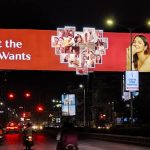
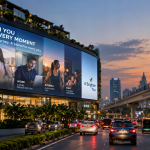

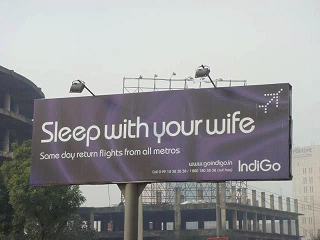
If you think outdoor advertising is just about “mass reach,” you haven’t seen the streets of Mumbai, Delhi, or Bangalore lately. In 2026, the Indian OOH landscape has shifted from being a “support medium” to becoming the main stage for brand storytelling.
India is a unique territory because it’s where high-tech meets high-touch. It’s a place where a 3D anamorphic dragon can fly over a luxury mall in Gurgaon, while just down the road, a hand-painted mural celebrates a local festival. It’s this collision of craft, culture, and commerce that makes it so special.
1. The Rise of “Viral Bait” (Anamorphic & 3D)
India has officially entered the era of the “Naked Eye” 3D billboard. From the massive L-shaped screens at CyberHub (Gurgaon) to Phoenix Palladium (Mumbai), brands like Lenovo, BMW, and Netflix are creating “spectacle” ads.
-
The Human Insight: In a country obsessed with social sharing, these ads aren’t just for the people on the street. They are designed to be filmed. A single billboard in Bangalore now gets millions of views on Instagram and WhatsApp, turning a local physical asset into a global digital one.
2. Infrastructure as the New Canvas
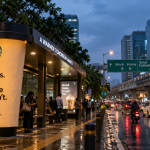
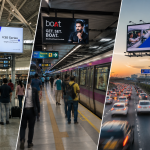
India’s infrastructure boom is fundamentally rewriting the media map. The rapid expansion of Metro networks (in cities like Pune, Kochi, and Ahmedabad) and Expressways has created premium, high-dwell-time environments.
-
Transit Excellence: We’re seeing more than just “wraps.” We’re seeing “Smart Stations” where the environment responds to the commuter. Brands are now using AR (Augmented Reality) at metro platforms to turn a boring five-minute wait into an interactive game or a virtual try-on session.
3. Hyper-Contextual “Bharat” Marketing
While the metros are going high-tech, the real growth is happening in Tier-2 and Tier-3 cities. In these markets, OOH is more than advertising—it’s Brand Authentication. For a new fintech app or an FMCG giant, having a massive physical presence on the main road of a growing city like Nagpur or Jaipur is a signal of trust. It tells the local consumer, “We are here, we are real, and we are part of your community.”
4. Cultural Resonance: The “Festival” Factor
India is a land of festivals, and OOH in 2026 has learned to “dress up” for the occasion. Whether it’s the Jal Jeevan Mission creating experiential “Yatras” or brands creating 3D “Ice Cream Waale Bappa” installations during Ganesh Chaturthi, the best ads are the ones that feel like guests at a party, not intruders in the street.
5. Sustainability with a Soul
India is also leading the way in Eco-OOH. We are seeing the rise of smog-eating billboards and solar-powered kiosks that provide free Wi-Fi and mobile charging to the public. It’s a reminder that advertising can actually make our cities better, not just busier.
Conclusion
I share these inspirations daily because I truly believe that great advertising can make our cities more interesting. When a brand uses a billboard to tell a story, spark a laugh, or provide a service, they aren’t just “buying space” they are adding value to the urban experience.
India is proof that when you combine data-driven precision with cultural soul, you get something truly magical. Stay tuned all week as we dive deeper into the cases, the tech, and the “jugaad” (creative hacks) that make Indian OOH world-class.