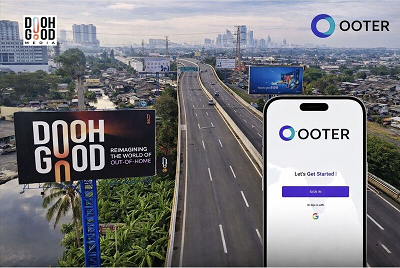








Digital conversions rarely happen in isolation. While the final action may occur online—through a website, app, or marketplace—the decision journey often begins much earlier in the physical world.
From outdoor advertisements and transit branding to retail signage and on-ground visibility, real-world brand touchpoints play a critical role in shaping perception, trust, and intent. As consumer journeys become increasingly hybrid, marketers are recognizing that offline exposure strongly influences online behavior.
Understanding this relationship is essential for improving digital conversion performance.
The Disconnect Between Attribution and Reality
Most digital attribution models focus on the last visible interaction. Clicks, retargeting ads, and search queries receive full credit, while earlier offline exposures remain invisible.
However, consumers do not think in attribution models. They build familiarity gradually through repeated encounters—many of which occur offline.
As a result, digital conversions often reflect the cumulative impact of physical brand presence rather than purely digital persuasion.
Why Real-World Touchpoints Build Conversion Readiness
Offline exposure influences mindset before action. When consumers encounter a brand in physical environments, they form subconscious judgments about credibility and scale.
These judgments reduce friction later in the digital funnel. When the same brand appears online, it feels familiar rather than unknown.
This familiarity accelerates decision-making and increases likelihood of conversion.
Types of Real-World Touchpoints That Drive Digital Action
1. Outdoor and Transit Advertising
High-frequency exposure along daily commute routes builds brand recognition quickly.
When consumers later encounter digital ads or search results, recall triggers trust—improving click-through and conversion rates.
2. Retail and Point-of-Sale Visibility
Even without immediate purchase, in-store visibility reinforces legitimacy.
Consumers who have seen a brand physically are more confident transacting digitally later.
3. Event and Experiential Presence
Live interactions create emotional memory. These experiences significantly increase post-event online engagement and search behavior.
Experiential touchpoints often produce high-intent digital traffic.
4. Local Market Visibility
Presence in familiar neighborhoods or city landmarks enhances relatability.
Local relevance increases comfort with digital transactions.
How Offline Exposure Influences Digital Consumer Psychology
Offline touchpoints affect several psychological drivers:
-
Familiarity: Recognized brands feel safer
-
Trust: Physical presence signals accountability
-
Reduced perceived risk: Known brands lower hesitation
-
Mental availability: Recalled brands surface first during search
These effects occur before digital interaction, shaping conversion probability.
The Role of Repetition in Hybrid Conversion Journeys
Repetition across environments strengthens memory encoding. Seeing a brand offline multiple times increases recognition speed online.
This cross-channel repetition improves performance metrics such as:
-
Higher branded search volume
-
Improved ad click-through rates
-
Lower cost per acquisition
-
Stronger conversion confidence
Digital efficiency often improves after offline campaigns, even if direct attribution is absent.
Search Behavior as a Bridge Between Offline and Online
One of the clearest indicators of offline influence is branded search uplift.
After exposure to physical media, consumers frequently turn to search to validate or explore further. This behavior connects offline awareness to online intent.
Monitoring regional search spikes provides valuable insight into offline campaign effectiveness.
Why Digital-Only Strategies Often Plateau
Brands relying solely on digital acquisition face diminishing returns. Competition increases, costs rise, and audiences become resistant.
Without offline reinforcement, digital messaging must work harder to build trust from zero.
Real-world touchpoints reduce this burden by warming the audience before digital engagement occurs.
Integrating Offline Touchpoints Into Conversion Strategy
To maximize impact, brands align offline and online messaging.
Key integration principles include:
-
Consistent brand identity
-
Message continuity across environments
-
Coordinated timing of offline and digital campaigns
-
Unified measurement frameworks
This alignment ensures offline exposure actively supports digital performance.
Measuring the Impact of Real-World Touchpoints
Although offline effects are indirect, brands measure influence through:
-
Branded search uplift
-
Regional conversion improvement
-
Pre- and post-campaign performance analysis
-
Recall-to-conversion correlation studies
These indicators reveal how physical presence contributes to digital outcomes.
Conclusion
Digital conversions are the final step in a much broader journey. Real-world brand touchpoints shape perception, build trust, and create readiness long before consumers click or tap.
By recognizing the influence of offline exposure and integrating it strategically with digital efforts, brands can significantly improve conversion performance.
In an increasingly hybrid consumer world, the most effective digital strategies are supported by strong real-world presence.