




If you remember Don Draper’s line, “Success comes from standing out, not fitting in,” you remember what built the great agency networks: audacity, craft, and the conviction that a single, culture-shaping idea could move markets. That creed powered institutions such as DDB, FCB, and MullenLowe (Lintas)—schools of advertising as much as agencies.
Yet Draper also warned, “Change is neither good nor bad. It simply is.” That inevitability has arrived. With legacy networks dissolving into data-driven super-structures, the industry is asking a hard question: what happens when creativity stops being enough?
A boardroom funeral for legends
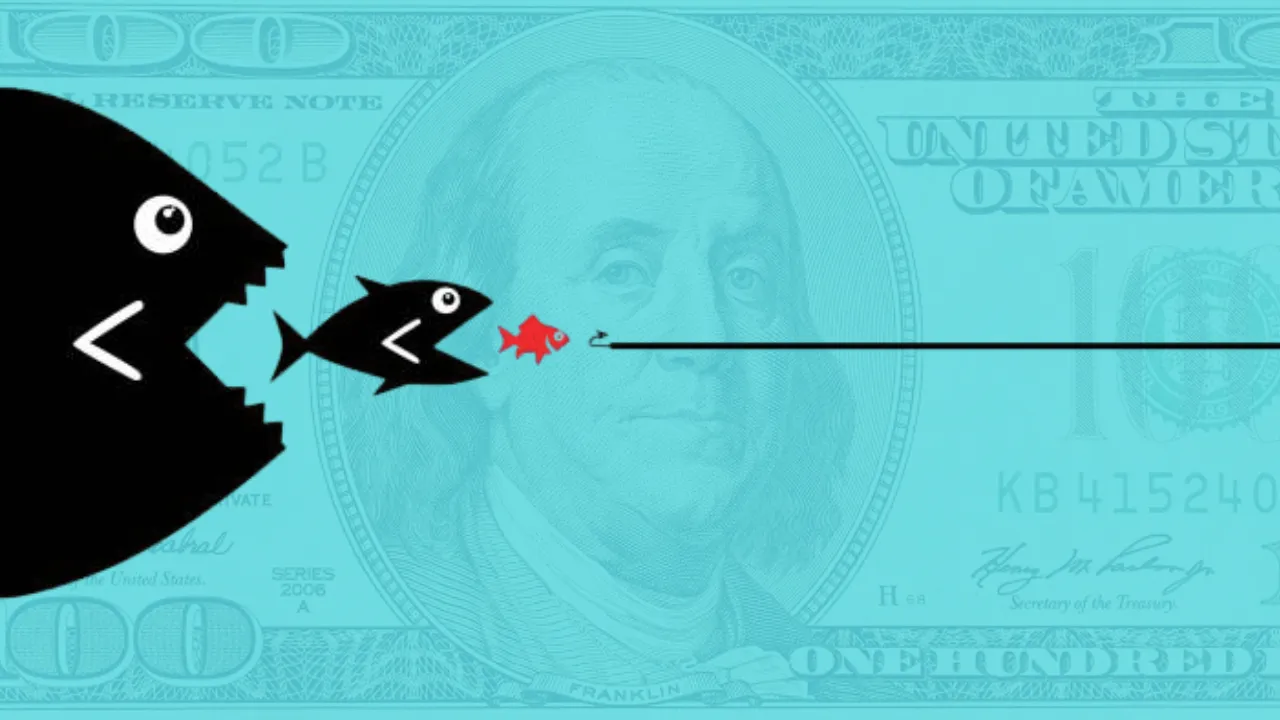
Following the $13 billion Omnicom–IPG deal this December, the retirement of DDB, FCB, and MullenLowe sent shockwaves through global advertising. These weren’t just acronyms on org charts; they were crucibles where careers were forged and category narratives were born. As their capabilities fold into the surviving super-brands—BBDO, TBWA\Lintas, and McCann—the industry must decide whether this is pragmatic evolution or a quiet eulogy for creativity as the primary currency.
“Creativity doesn’t end; it evolves”
Veteran creative leader K.V. Sridhar (Pops) offers needed context: “Creativity will never end. It changes shape like water.” His point: the medium and the model are shifting, not the human impulse to make meaning.
Even so, he laments a cultural erosion. Agencies once run by storytellers are now governed by balance-sheet logic. When revenue mixes tilt toward digital plumbing and media efficiency, creative culture thins out. The result is a landscape where the passion for craft competes with the pressure for performance.
From “how it feels” to “what it clicks”
The golden age rewarded intuition. DDB didn’t A/B test its way to Volkswagen’s “Think Small.” Lintas didn’t turn “Hamara Bajaj” into a national anthem by reading heatmaps. Those leaps of faith made markets. Today, however, the center of gravity has moved from craft to scale—from singular campaigns to systems, from one film to always-on feeds.
Azazul Haque, Group CCO at Creativeland Asia, frames the consolidation bluntly: the mega-merger is financial necessity, not creative destiny. ROI pressure collapsed the middle. Agencies that weren’t massive data engines or nimble creative boutiques got squeezed. Meanwhile, as Ambi Parameswaran notes, rolling separate P&Ls into one “mother balance sheet” is a rational, if ruthless, fix.
Talent turbulence: the new migration
Beyond logos and ledgers, the human story stings most. The old “university of advertising” pathway is fading. Young talent now aims for indies, platforms, consultancies, or creator careers. As Sridhar observes, the dream of joining a big network has dimmed. Some stars—think creator-strategists in the Tanmay Bhat mold—thrive independently. Big networks, in turn, retain select seniors as client-stability anchors, not always as cultural sparks. The risk: data-rich, talent-poor giants that can distribute content but struggle to move hearts.
Big idea vs. big feed
Haque argues the legacy operating system was built for the era of one big idea pushed through film, print, and outdoor. Today’s market rewards ecosystems: content loops, communities, creators, commerce, and constant optimization. The next competitive advantage could be an AI-native influence asset—not as a gimmick but as an adaptive, updatable brand property that lives across platforms.
Here lies the fault line: “People who understand algorithms don’t understand creativity. People who understand creativity don’t understand the internet,” Sridhar says. That gap fuels internal friction. Mergers can’t fix it. Only new talent models and dual-track org design—where data engineers and narrative makers co-lead without hierarchy—can bridge it.
What excellence looks like now
Creative excellence is being redefined. It’s less about the single cultural moment and more about orchestrated presence—right message, right surface, right second. Winners will:
-
Design for systems, not spots—story IP that adapts across formats.
-
Marry signal with soul—data-guided, not data-dictated, craft.
-
Operationalize speed—creative pods that prototype, test, and iterate weekly.
-
Instrument the journey—OOH to social to retail to CRM, measured end-to-end.
-
Grow creators inside—embed creator-strategists and community editors alongside planners and art directors.
Will creativity die—or molt?
Parameswaran is optimistic: respected names have vanished before (Chaitra, Everest, Trikaya), and new stars emerged. After all, Ulka means “shooting star.” The lesson is consistent: irrelevance retires you, not age. Agencies that re-platform around productized creativity + platform intelligence will thrive. Those that cling to old hierarchies will fossilize.
The operating system of the surviving giants
To keep their soul while speaking the language of algorithms, super-networks will need a new OS:
1) Dual-engine structure
-
Creative Engine: narrative IP, design systems, brand platforms.
-
Performance Engine: data pipelines, media science, MMM/MTA, retail media.
Shared KPIs prevent one engine from cannibalizing the other.
2) Full-funnel accountability
Brand lift, demand creation, and revenue outcomes must be joint goals—briefed together, measured together.
3) Talent remix
Hybrid roles—creative technologists, social editors, prompt designers, AI art directors, retail-media planners—become core, not fringe.
4) Product over projects
Shift from one-off campaigns to owned assets: knowledge graphs, reusable design libraries, predictive briefs, and proprietary creator networks.
5) Craft re-armed with AI
Use AI to multiply craft—versioning, personalization, and contextual adaptations—while safeguarding human judgment for taste, meaning, and ethics.
A creative brief for the algorithmic age
-
Problem: Attention is fragmented; distribution is opaque.
-
Audience truth: People reward relevance, authenticity, and utility.
-
Brand truth: Distinctiveness still compounds; memory structures matter.
-
Strategy: Build an adaptive storyworld—memorable by design, measurable by default.
-
Ideas: Design modular, remixable assets that travel from OOH to short-video to commerce without losing the brand’s voice.
-
Measurement: Close the loop—creative telemetry, incrementality tests, and retail lift, not just CTR.
The human touch machines can’t fake
The names on the doors may change, but the challenge remains timeless: move people. Algorithms can locate attention; only human insight can earn it. When data and distribution sit beside—not above—ideas, creativity doesn’t shrink. It scales.
So, no—creativity hasn’t died. It has moulted. The agencies that survive will be the ones that teach algorithms to serve imagination, not the other way around.