




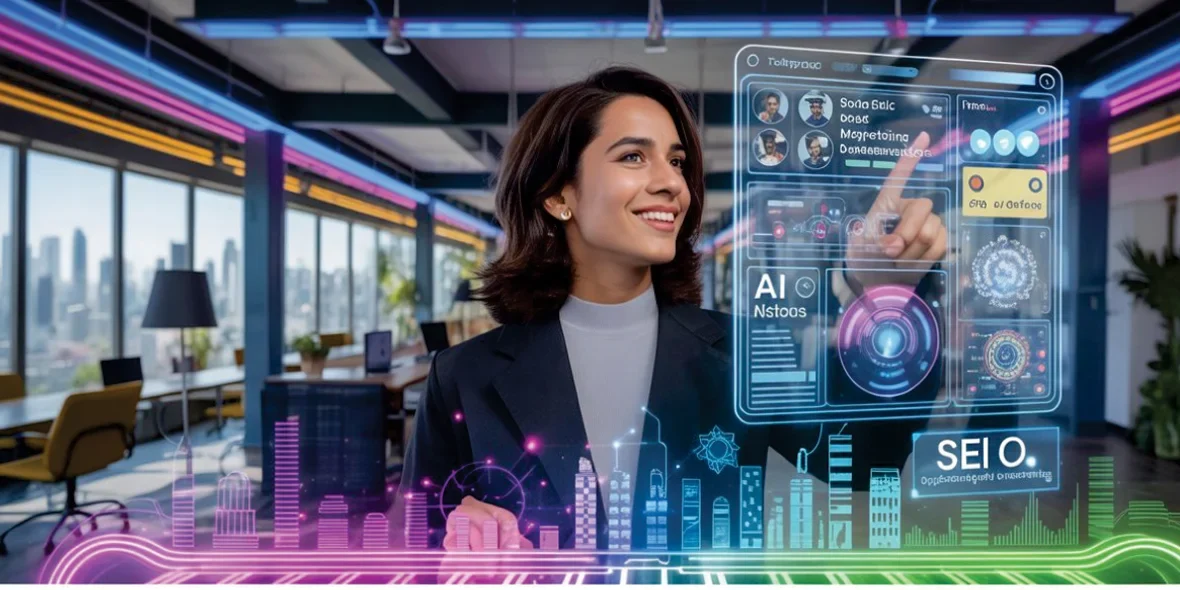
Indian advertising is entering a decisive new phase. As audiences become more diverse, distracted, and culturally nuanced, traditional targeting methods are reaching their limits. This is where Multimodal AI for Hyperpersonalised Advertising emerges as the next frontier. Instead of relying only on clicks, keywords, or demographics, multimodal AI understands text, images, audio, video, language, emotion, and context together—making advertising smarter and more human.
In a market as complex as India, this shift is not optional. It is essential.
What Is Multimodal AI in Advertising?
Multimodal AI refers to artificial intelligence systems that process and interpret multiple data formats simultaneously. Rather than analysing text alone, these systems combine inputs such as:
-
Visual cues (images, videos, design styles)
-
Audio signals (voice, tone, music)
-
Textual data (copy, comments, search queries)
-
Behavioral signals (location, device usage, timing)
By integrating these modes, AI understands how people feel—not just what they click. Consequently, advertising becomes adaptive, contextual, and deeply personalised.
Why India Is Ready for Multimodal AI Advertising
India’s digital ecosystem is uniquely suited for multimodal intelligence. Consumers switch between languages, platforms, and content formats constantly. A single user may watch a Hindi reel, search in English, listen to a regional podcast, and shop via vernacular apps—all in one day.
Multimodal AI thrives in this complexity. It identifies patterns across formats and languages, enabling brands to deliver culturally aligned messaging at scale. Therefore, hyperpersonalisation in India must be multimodal to be effective.
Multimodal AI for Hyperpersonalised Advertising: The Next Frontier in India
Traditional personalisation shows different ads to different people. Multimodal AI goes further—it shows the right mood, format, and message to the same person at different moments.
For example, a consumer browsing late at night may receive calm, reassurance-led messaging, while the same user during commute hours sees short, energetic creatives. This dynamic adaptation is possible because multimodal AI reads context, not just profiles.
As a result, advertising becomes situational, not static.
Cultural Intelligence Beyond Language Translation
One of the biggest advantages of multimodal AI is cultural sensitivity. Instead of simple language localisation, AI systems learn visual symbolism, emotional triggers, humor styles, and regional preferences.
In India, where emotion often drives decisions more than logic, this capability is critical. A festive campaign in Gujarat requires a different tone, color palette, and pacing than one in Kerala or Punjab. Multimodal AI enables these distinctions without manual creative overload.
Hence, brands move from national sameness to regional resonance.
B2C Impact: From Mass Reach to Personal Relevance
In B2C advertising, multimodal AI transforms engagement across sectors like FMCG, retail, fintech, OTT, and mobility.
AI systems analyse:
-
What visuals trigger longer watch time
-
Which music or voice tone improves recall
-
How users emotionally respond to creative styles
Platforms powered by companies like Google and Meta already use multimodal signals to optimise delivery. However, the next phase allows brands themselves to design creatives dynamically using AI insights.
Therefore, ads stop interrupting and start blending into user intent.
B2B Advertising: Precision Meets Personalisation
B2B marketing in India is also evolving. Decision-makers are overwhelmed with content, making relevance crucial. Multimodal AI helps B2B brands personalise messaging based on industry context, content consumption style, and professional mindset.
For instance, a CIO consuming long-form video content may receive insight-led storytelling, while a procurement head browsing comparison articles sees data-driven creatives. This adaptive communication improves engagement without increasing media spend.
Thus, B2B advertising becomes more human and less transactional.
Generative AI and Multimodal Creativity
The rise of generative AI platforms such as OpenAI has accelerated multimodal creativity. Brands can now generate copy, visuals, video snippets, and audio variations aligned to different moods and markets.
Multimodal frameworks test and evolve these creatives in real time, learning what works where. As a result, campaigns improve continuously instead of relying on pre-launch assumptions.
This creates a feedback loop between creativity and intelligence.
Privacy, Ethics, and Trust in the Indian Context
With greater intelligence comes greater responsibility. Multimodal AI must respect privacy, consent, and data protection—especially as India strengthens its digital governance frameworks.
The future belongs to brands that balance hyperpersonalisation with transparency. AI should feel helpful, not invasive. Therefore, ethical deployment will be a key differentiator in the coming years.
Industries Leading Multimodal AI Adoption in India
Early adoption is visible across:
-
E-commerce & D2C: Contextual product storytelling
-
Fintech: Emotion-led trust building
-
Media & Entertainment: Mood-based content discovery
-
Enterprise Tech: B2B decision intelligence
-
Education: Adaptive learning and lead nurturing
These sectors benefit most from contextual relevance rather than volume-driven messaging.
The Road Ahead: Advertising That Understands Humans
Multimodal AI signals a shift from optimisation to understanding. It allows brands to sense emotion, intent, and context simultaneously—something traditional advertising could never do.
Multimodal AI for Hyperpersonalised Advertising is not just the next frontier in India—it is the foundation of future brand relevance. In a culturally rich, emotionally driven market, the brands that understand how people feel will always outperform those that only track what people do.