
India’s live music landscape has crossed a defining milestone. What once existed as scattered indie gigs and limited international tours has now transformed into a structured, high-growth entertainment ecosystem.
Today, the country’s concert economy stands as one of the most powerful platforms for brand engagement. It attracts attention not only from music lovers, but also from marketers, tourism boards, policymakers, and global festival organisers.
As live experiences take centre stage, concerts have become far more than performances. They now function as cultural marketplaces where identity, aspiration, and community intersect.
From Subculture to Structured Industry
A decade ago, live music in India largely revolved around niche urban audiences. Shows were limited. Infrastructure was inconsistent. Brand involvement remained minimal.
However, that picture has changed dramatically.
Over the years, festivals such as Sunburn, Hornbill Festival, Shillong’s Cherry Blossom Festival, and Lollapalooza India have helped professionalise the ecosystem.
These properties introduced global production standards while retaining strong local identity.
As a result, live music evolved from an occasional indulgence into a mainstream cultural habit.
Concerts as Cultural Infrastructure
Modern Indian music festivals no longer focus on sound alone.
They blend music with fashion, food, travel, technology, and lifestyle. This fusion transforms concerts into immersive, multi-day destinations.
Attendees do not just listen. They participate and dress for the experience. They travel for it and share it digitally in real time.
Consequently, concerts now function as temporary cultural cities — spaces where brands can exist naturally rather than intrusively.
Why Brands Are Moving Toward Live Experiences
In a digital-heavy world, attention has become fragmented.
Ads are skipped. Feeds are crowded. Recall is short-lived.
Live music offers something digital platforms cannot — presence.
When audiences gather physically, emotional engagement increases. Moments become memories. And memories build brand association.
Therefore, brands increasingly view concerts as long-term equity builders rather than short-term visibility tools.
From beverage companies and fashion labels to fintech platforms and automobile brands, live music has become a preferred branding playground.
The Shift from Sponsorship to Participation
Earlier, brand involvement meant logo placements and stage backdrops.
Today, that approach feels outdated.
Modern concert branding focuses on participation.
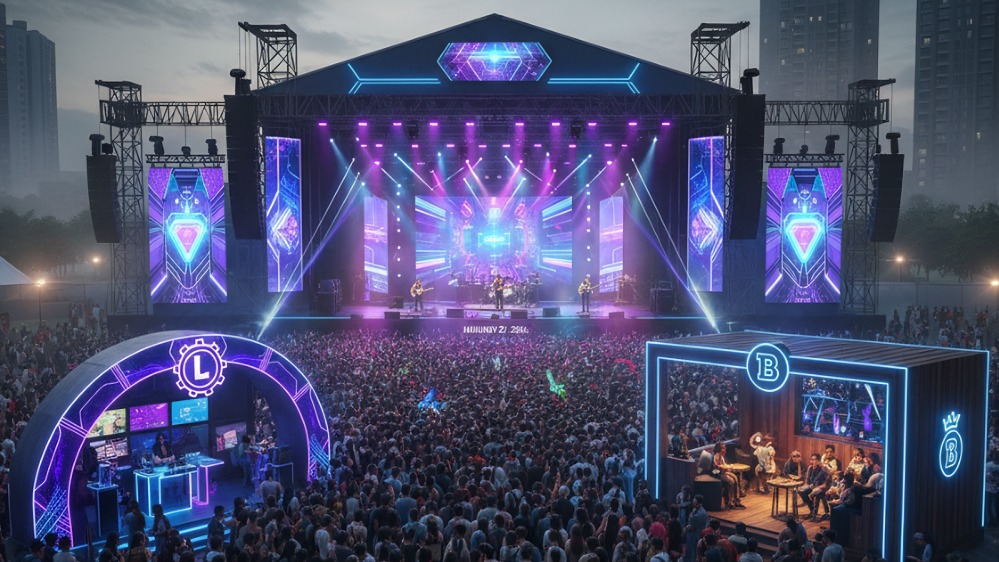
Brands now create experiential zones, interactive installations, AR integrations, merchandise collaborations, and creator-led storytelling.
Instead of interrupting the experience, brands aim to enhance it.
This shift allows companies to become part of the audience journey — from entry gates to encore moments.
Tourism, Youth Culture, and Economic Impact
The concert economy now extends beyond entertainment.
Festivals drive tourism, boost local economies, and generate seasonal employment.
States like Goa, Meghalaya, and Nagaland have successfully positioned music festivals as cultural tourism anchors.
Hotels fill up. Airlines see demand spikes. Local vendors benefit.
As a result, live music increasingly receives recognition as an economic contributor, not just a cultural activity.
This has also caught the attention of policymakers and city administrations.
Streaming Didn’t Kill Live Music — It Strengthened It
Interestingly, the rise of streaming platforms has not weakened live concerts.
Instead, it has amplified demand.
Streaming helps artists discover audiences across geographies. Live performances then convert that discovery into loyalty.
Fans now travel cities to experience artists they follow online.
Therefore, recorded music feeds the concert economy — and not the other way around.
Why Concerts Deliver Strong Brand Recall
Research consistently shows that experiences create stronger emotional memory than advertisements.
At concerts, people feel joy, excitement, belonging, and freedom — emotions that brands strive to associate with.
When a brand is present during these moments, recall becomes subconscious.
This emotional imprint explains why concert partnerships often outperform traditional media on recall and affinity metrics.
A New Playground for Cultural Storytelling
Concerts have become storytelling spaces.
Brands can express values through sustainability initiatives, inclusivity zones, community programs, and creative collaborations.
Rather than selling products, they communicate identity.
This aligns perfectly with younger audiences who prefer meaning over messaging.
For Gen Z and millennials, brands must stand for something — not just offer discounts.
Live music provides that stage.
The Road Ahead for India’s Concert Economy
India’s concert ecosystem is still evolving.
Infrastructure continues to improve. Global promoters are entering the market. Ticketing platforms are maturing.
At the same time, audience appetite continues to grow.
As disposable incomes rise and experience spending increases, live entertainment will only gain momentum.
For brands, this presents a rare opportunity to embed themselves into cultural moments rather than compete for screen time.
Conclusion: Where Culture and Commerce Finally Meet
India’s booming concert economy represents a powerful shift in how culture is consumed and how brands connect.
It is no longer about visibility alone. It is about belonging.
In this experience-led era, concerts offer something unique — collective emotion at scale.
For brands willing to listen, participate, and respect the culture, live music is no longer just entertainment.
It is the most powerful branding playground India has today.