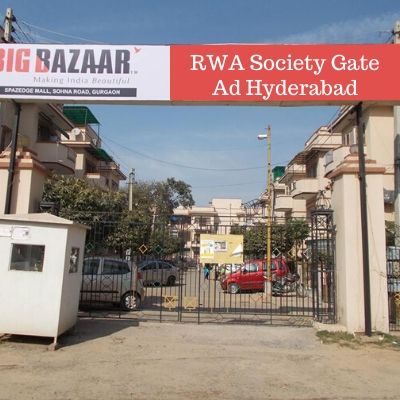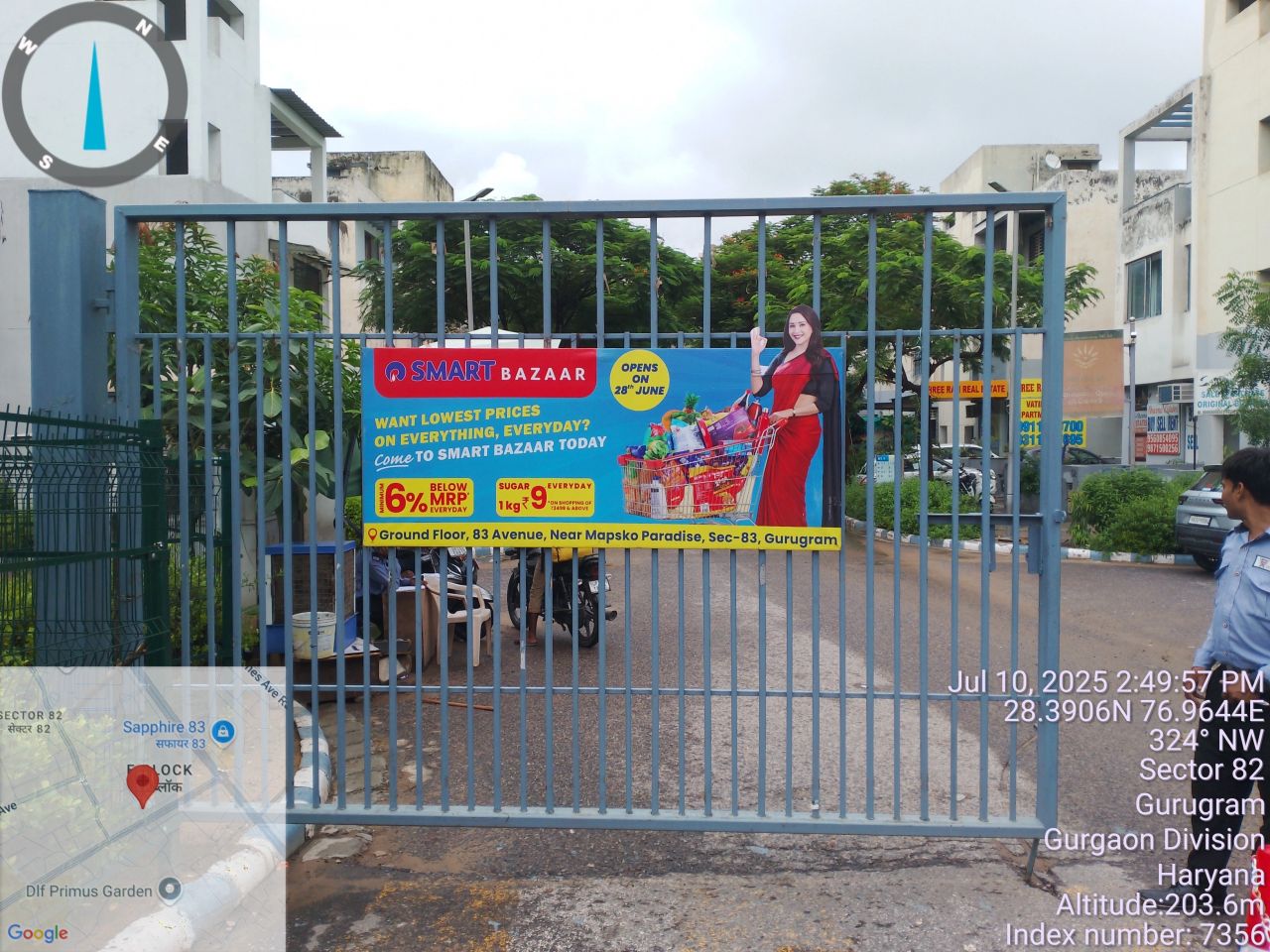

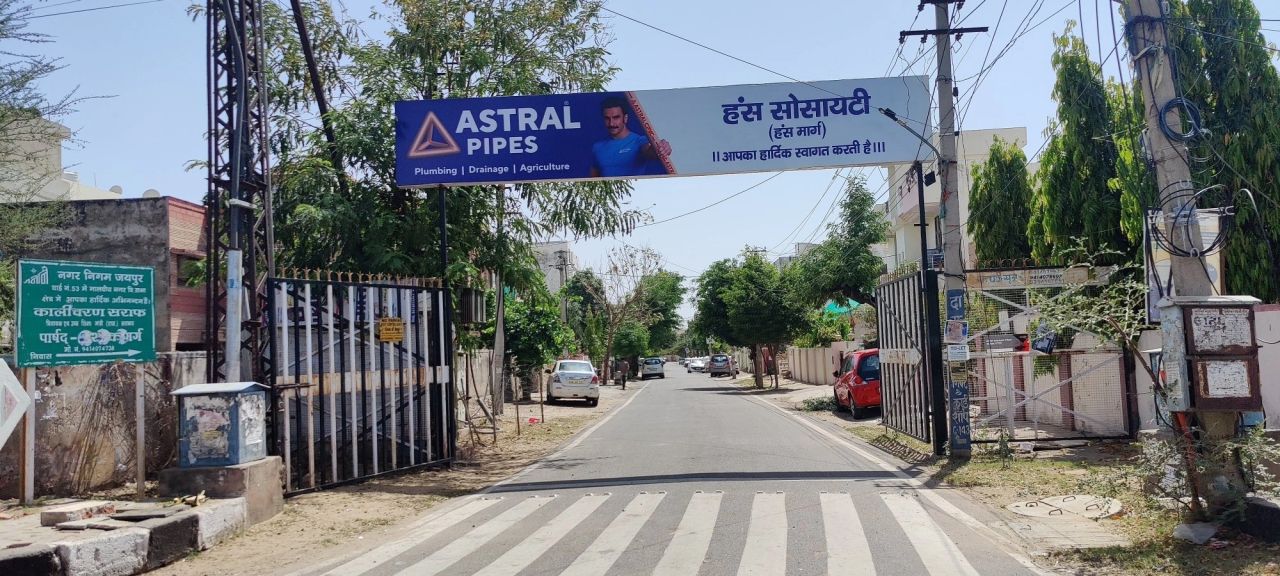
The transition from massive city-wide billboards to hyper-targeted residential marketing is the most significant shift in the Indian advertising landscape in 2026. While high-traffic junctions offer “reach,” RWA Society Gate Branding offers something far more valuable: Intimacy and Trust.
When a brand occupies the entry and exit points of a gated community, it isn’t just advertising to a consumer; it is becoming a part of that consumer’s daily commute, their security checkpoint, and their “coming home” ritual.
1. The Psychology of the “Safety Shield”
The biggest hurdle for any brand today is the “stranger” factor. In a world of digital scams and cluttered streets, consumers are naturally skeptical. However, the gate of a residential society is a psychological boundary. Inside those gates is “home” a place of safety and vetting.
When an RWA allows a brand to install its creative on the main gate, it carries an implicit endorsement. Residents subconsciously feel that if the society committee has allowed this brand into their sanctuary, the brand must be legitimate and high-quality. This “Safety Shield” immediately lowers the consumer’s guard, turning a cold advertisement into a trusted recommendation.
2. Capturing the “Transition Moments”
In marketing, timing is everything. Society gate branding captures the two most important transition moments of an urban dweller’s day:
-
The Departure (The “To-Do” Mindset): As residents head out for work or school, they are in a productive, decision-making mindset. Seeing an ad for a new premium grocery app or a nearby healthcare clinic at the gate plants a seed for their daily errands.
-
The Arrival (The “Relief” Mindset): Upon returning, the gate is the first sign that they have reached their safe zone. This is when the brain is most relaxed and receptive. A brand seen at this moment is associated with the positive emotion of “reaching home.”
Unlike a highway billboard that flashes past at 60 km/h, the society gate involves a forced slow-down. Whether it’s waiting for the RFID sensor, a manual entry log, or the boom barrier to lift, the resident has 5 to 15 seconds of undivided attention right at the gate.
3. High-Frequency Recall Without the Fatigue
The “Rule of Seven” in marketing states that a consumer needs to see a brand at least seven times before they take action.
-
On Social Media: Seeing an ad seven times feels like spam.
-
At the Society Gate: Seeing an ad twice a day (morning and evening) feels like part of the environment.
Because the gate is a permanent fixture of their daily routine, residents achieve high-frequency recall without the “annoyance factor.” Over a 30-day or 90-day campaign, the brand becomes as familiar as the society’s own name. This builds Brand Salience the ease with which a brand comes to mind when a need arises.
4. Surgical Targeting: Zero Media Wastage
Traditional Out-of-Home (OOH) advertising suffers from “spillage.” If you put a billboard on a main road, you pay for 100,000 eyes, even if only 5,000 of them can afford your product.
Society Gate Branding is the “Laser” of OOH. Brands can handpick societies based on:
-
Property Value: Only targeting premium 3-4 BHK apartment complexes for luxury cars or high-end real estate.
-
Geography: A local preschool or hospital can target every society within a 2-kilometer radius, ensuring 100% of their budget is spent on “walk-in” potential customers.
-
Demographics: Targeting “young professional” hubs for fintech apps or “family-heavy” gated communities for FMCG products.
5. The “Decision-Maker” Hub
Decisions about home insurance, children’s education, holiday packages, and new car purchases are rarely made individually on a smartphone. They are made at the dinner table.
By branding the gate, you are reaching the entire household unit simultaneously. The husband, wife, children, and even the grandparents see the same message at the same time. This creates a “shared recall,” making it much easier for the brand to enter the family conversation later that evening.
6. The Perfect Fit for Service-Led Brands
While FMCG and E-commerce thrive here, RWA gate branding is the lifeline for service-based sectors:
-
Real Estate: Reminding residents that a “luxury upgrade” is available just down the road.
-
Healthcare: Ensuring a hospital’s emergency number is the first thing a resident thinks of because they’ve seen it every morning at the gate.
-
Education: Catching parents during the school-bus drop-off hours.
7. The Future: A Phygital Hyperlocal Ecosystem
The future of RWA gate branding isn’t just static boards. In 2026, we are seeing a “Phygital” (Physical + Digital) integration.
-
QR Code Integration: A gate ad with a “Society-Only” discount code drives immediate digital traffic.
-
OMNI-Channel Loop: Smart brands are now pairing gate branding with local activations inside the society clubhouse and digital ads on the society’s visitor management app (like MyGate or NoBrokerHood).
When a resident sees the brand at the Gate (Physical) and then receives a notification on the App (Digital), the loop is closed. This creates an inescapable brand presence within the community.
Conclusion
In an era where digital noise is at an all-time high, the most successful brands are those that find a way to become a “neighbor.” RWA Society Gate Branding is the most effective way to cross the final barrier into a consumer’s life.
It is cost-effective, high-impact, and carries a level of trust that no other outdoor medium can provide. For any brand looking to win the “Great Indian Middle Class” or the “Premium Urban Elite,” the battle isn’t won on the highway it’s won at the gate.