




Advertising environments continuously evolve with changing consumer behaviour. In recent years, the rise of transit media has become one of the most notable shifts within the out-of-home ecosystem. As urban mobility expands, brands are rediscovering the power of bus, metro, and train advertising to deliver consistent visibility and high-frequency exposure.
While digital channels face saturation and declining attention spans, transit media offers uninterrupted brand presence across daily commute routes. Consequently, marketers are once again prioritising transit networks as strategic communication platforms rather than secondary media options.
Understanding the Rise of Transit Media
Transit media refers to advertising placed on and within public transportation systems such as buses, metro trains, suburban railways, and long-distance trains. These formats engage audiences during fixed travel routines, often for extended durations.
Moreover, rising urbanisation and increased reliance on public transport have expanded audience reach significantly. As commuter volumes grow, transit advertising naturally becomes more valuable for brands seeking consistent impressions.
Why Transit Advertising Is Regaining Brand Interest
Increased Daily Commute Time
Urban commuters spend a substantial portion of their day travelling. This prolonged exposure window allows advertisements to build familiarity through repetition.
Unlike skippable digital ads, transit media remains visible throughout the journey. Therefore, brand messages benefit from sustained cognitive recall.
Reduced Digital Fatigue
Consumers today experience digital overload across mobile apps, streaming platforms, and social media feeds. As a result, attention fragmentation has become a challenge.
Transit advertising provides a screen-free engagement zone. When commuters are physically present in transit environments, visual brand communication becomes more noticeable and less intrusive.
Bus Advertising: Expanding Street-Level Visibility
Bus advertising continues to be one of the most mobile and impactful transit formats.
Exterior Bus Branding
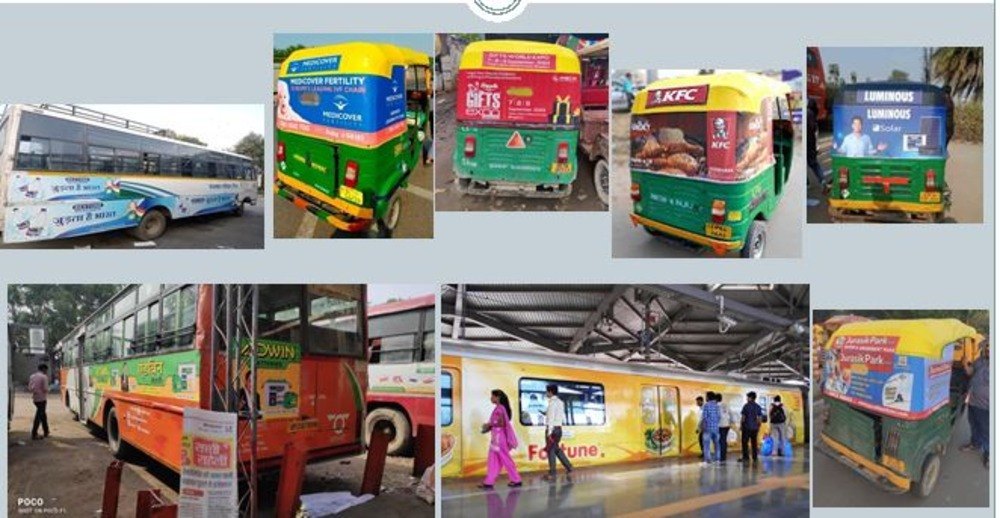
Full bus wraps, side panels, and rear advertisements transform vehicles into moving billboards. These formats capture attention across multiple neighbourhoods and traffic corridors.
Additionally, buses operate throughout the day, ensuring repeated exposure to both commuters and pedestrians.
Interior Bus Advertising
Interior panels and handle branding reach captive audiences during travel time. This environment supports short messaging, QR codes, and directional call-to-action strategies.
As a result, bus advertising delivers both reach and engagement at street level.
Metro Advertising: High-Frequency Urban Impact
Metro systems represent premium transit environments due to structured passenger movement and high footfall density.
Station Branding Opportunities
Advertising at entry gates, concourse areas, staircases, and platforms allows brands to dominate commuter attention during waiting periods.
Since metro commuters follow predictable routes, message reinforcement occurs daily.
Metro Train Wraps and In-Train Media
Train exterior wraps create large-scale city visibility, while in-coach screens and panels deliver focused engagement. Together, these formats combine scale with dwell-time advantage.
Consequently, metro advertising is increasingly viewed as a high-impact brand-building medium.
Train Advertising: Long-Duration Engagement
Railway advertising offers one of the longest engagement durations among transit formats.
Inside Coach Branding
Posters, vinyl panels, and digital screens inside coaches engage passengers throughout the journey. This extended exposure supports storytelling and awareness campaigns.
Platform and Station Media
Railway platforms attract consistent footfall from diverse demographic groups. Advertising in these zones ensures mass reach across multiple regions.
Therefore, train advertising remains effective for both national and regional campaigns.
Role of DOOH in Transit Media Growth
Digital Out-of-Home has further accelerated the rise of transit media. Digital screens at stations and terminals allow dynamic content rotation and time-based messaging.
Moreover, DOOH enables brands to align communication with peak hours, special events, and location-specific triggers. This flexibility enhances relevance without increasing inventory requirements.
Data-Driven Planning and Measurement
Modern transit advertising now integrates data analytics for route selection, footfall estimation, and audience profiling.
With improved measurement tools, advertisers can evaluate exposure frequency and campaign efficiency more accurately. As a result, transit media is no longer perceived as non-measurable.
Why Brands Prefer Transit Media for Awareness Campaigns
Transit advertising offers several strategic advantages:
-
High daily frequency exposure
-
Predictable commuter behaviour
-
Non-intrusive brand presence
-
Strong geographic coverage
-
Effective support for product launches
Therefore, brands increasingly use transit media to complement digital and traditional channels.
Transit Media as a Trust-Building Platform
Advertising within regulated transport environments enhances brand credibility. Since transit spaces are managed by government or authorised agencies, consumers associate ads with legitimacy.
This perceived trust significantly strengthens brand image, especially for large-scale consumer and technology brands.
Future Outlook of Transit Advertising
As cities continue expanding transit infrastructure, advertising opportunities will grow proportionately. Smart stations, digital platforms, and integrated mobility hubs will further enhance brand engagement.
Ultimately, the rise of transit media reflects a return to high-impact, real-world communication that blends visibility with routine human movement.
Conclusion
Bus, metro, and train advertising are gaining renewed attention because they deliver what modern marketers seek most—consistent exposure, contextual relevance, and uncluttered visibility.
In an era dominated by fleeting digital impressions, transit media restores continuity and physical presence. As a result, brands are once again investing in transportation networks to build lasting recall and meaningful awareness.