



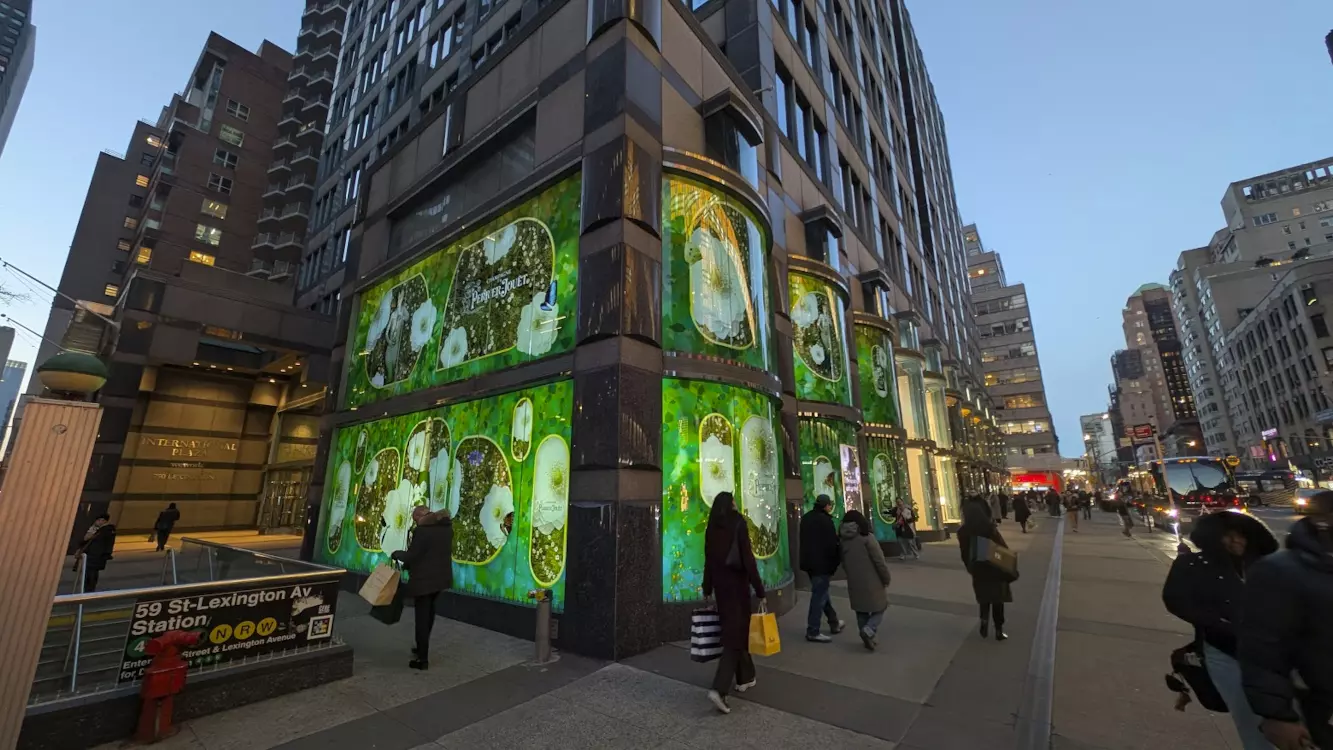
The Rise of Large-Format and Immersive DOOH Screens Across Transit and Retail Environments signals a clear transformation in how brands use outdoor media. Digital Out-of-Home is no longer limited to flat roadside screens or static loops. Instead, advertisers are increasingly investing in larger-than-life, immersive digital canvases that command attention and turn everyday spaces into brand experiences.
Across transit hubs and retail destinations, DOOH is evolving from a visibility medium into an experience-led storytelling platform, designed to stop movement, increase dwell time, and elevate brand perception.
Why Large-Format and Immersive DOOH Is Gaining Momentum
Attention Is the New Currency
In crowded urban environments, small screens are easy to ignore. Large-format and immersive DOOH screens cut through clutter by:
-
Dominating sightlines
-
Creating visual depth and motion
-
Delivering cinematic-scale storytelling
As a result, brands gain higher attention, stronger recall, and greater social amplification.
Infrastructure Is Finally Catching Up
Modern transit stations, airports, and malls are now designed with:
-
Open atriums
-
Wide concourses
-
High ceilings
This architecture naturally supports large-format LED walls, curved videowalls, and immersive screen arrays, accelerating adoption.
Transit Environments Driving Immersive DOOH Growth
Airports as Premium Digital Showrooms
Airports are leading the adoption of immersive DOOH because they offer:
-
High dwell time
-
Affluent, global audiences
-
Brand-safe, premium environments
Large-format LED walls in arrival halls, departure concourses, and duty-free zones allow brands to showcase innovation, luxury, and aspiration at scale. Major hubs such as Indira Gandhi International Airport, Chhatrapati Shivaji Maharaj International Airport, and Kempegowda International Airport are increasingly hosting immersive DOOH assets.
Metro Stations and Urban Transit Nodes
Metro stations and interchanges have become high-impact DOOH zones due to:
-
Predictable footfall
-
Repeated daily exposure
-
Longer waiting times
Large digital walls and immersive corridor screens in metro systems help brands engage commuters when attention is naturally available.
Retail Environments Embracing Immersive DOOH
Malls as Experience-First Destinations
Modern malls are no longer just shopping centres; they are lifestyle and entertainment hubs. Immersive DOOH screens:
-
Anchor atriums and central courts
-
Enhance launch events and festive campaigns
-
Drive footfall to stores
Retail-focused large-format DOOH helps brands influence consumers at the point of discovery and decision-making.
Blending Physical and Digital Retail Journeys
Immersive DOOH in retail environments bridges online and offline by:
-
Supporting omnichannel campaigns
-
Reinforcing digital-first brand identities
-
Encouraging social sharing and UGC
As a result, retail DOOH becomes a continuation of the brand’s digital ecosystem.
What Makes DOOH “Immersive”?
Beyond Flat Screens
Immersive DOOH includes:
-
Curved and wraparound LED walls
-
Multi-screen environments
-
Floor-to-ceiling digital installations
-
Anamorphic and depth-based visuals
These formats surround viewers, creating a sense of presence rather than passive viewing.
Motion, Scale, and Context
Immersion is achieved through:
-
Seamless motion graphics
-
Context-aware content
-
Visual storytelling designed for architectural spaces
Therefore, creative and screen architecture work together as one experience.
Categories Leading the Adoption Curve
Luxury, Fashion, and Automotive Brands
These categories benefit most from:
-
Scale-driven perception
-
High-quality visual storytelling
-
Premium environment association
Large-format DOOH reinforces exclusivity and aspiration.
Technology and Consumer Electronics
Tech brands use immersive DOOH to:
-
Demonstrate innovation
-
Showcase product ecosystems
-
Signal future-readiness
Entertainment, OTT, and Sports Properties
Blockbuster content launches and sports seasons thrive on immersive DOOH due to:
-
Cultural relevance
-
Visual drama
-
Shareability
Impact on Media Planning and Creative Strategy
Fewer Screens, Bigger Impact
Instead of spreading budgets across many small units, planners are:
-
Concentrating spends on fewer, iconic screens
-
Prioritising impact over volume
This shift improves memorability and brand stature.
Creative Becomes Experience Design
Large-format and immersive DOOH require:
-
Bespoke creative assets
-
Motion-first storytelling
-
Collaboration between media, creative, and tech teams
Generic adaptations no longer work at this scale.
Measurement and Effectiveness
While immersive DOOH is awareness-led, impact is measured through:
-
Dwell-time and footfall modelling
-
Brand lift and recall studies
-
Social media amplification
-
Correlation with search and digital engagement
Therefore, immersive DOOH now supports accountable brand-building, not just visibility.
Challenges Brands Must Navigate
Higher Production and Planning Complexity
Immersive DOOH requires:
-
Advanced content creation
-
Precise technical calibration
-
Longer planning cycles
However, the impact often justifies the investment.
Creative Fatigue Risk
Because these screens attract attention quickly, creative refresh and storytelling variation are essential to maintain effectiveness.
What the Future Looks Like
The rise of large-format and immersive DOOH screens across transit and retail environments will continue to accelerate through:
-
Anamorphic and 3D illusion content
-
AI-driven contextual triggers
-
Programmatic control of premium screens
-
Smart city infrastructure integration
DOOH will increasingly function as urban digital architecture, not just advertising inventory.
Conclusion
The Rise of Large-Format and Immersive DOOH Screens Across Transit and Retail Environments reflects a broader shift toward experience-led brand communication. By combining scale, motion, and context, immersive DOOH transforms everyday transit and retail spaces into powerful storytelling platforms.
For brands seeking attention, memorability, and premium perception in fragmented urban environments, large-format and immersive DOOH is no longer optional—it is becoming the new standard for impactful outdoor advertising.