





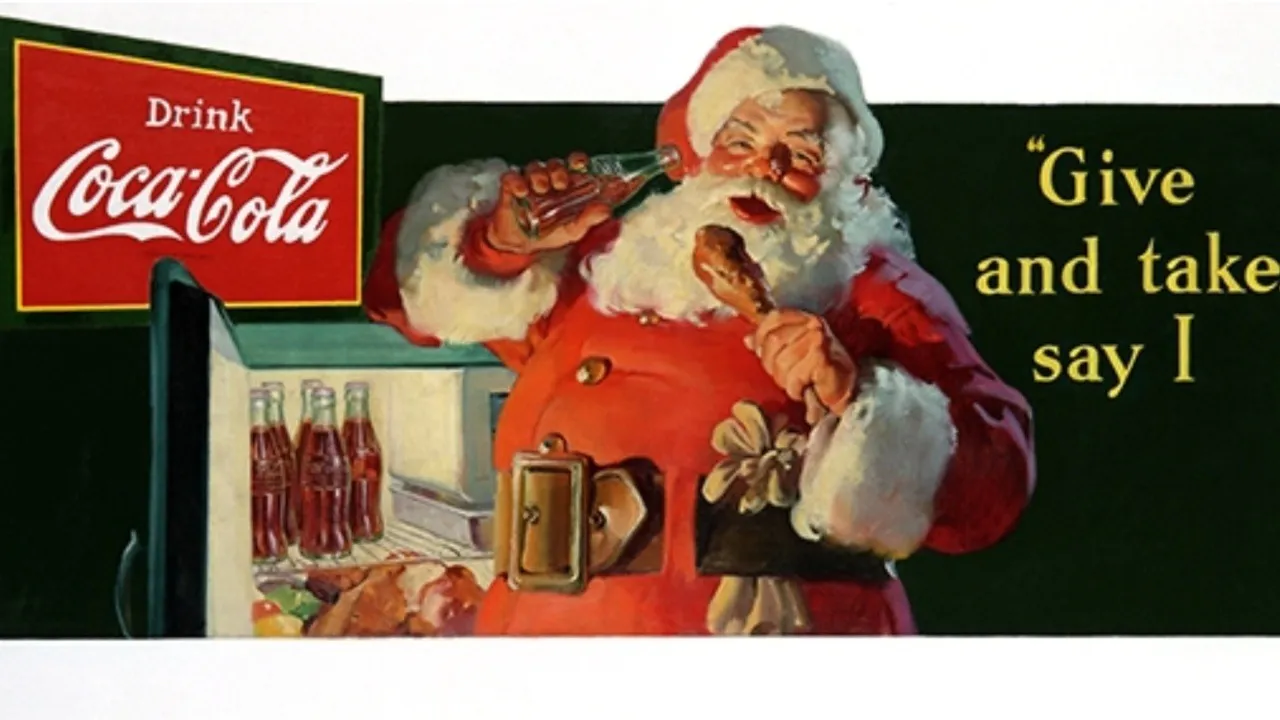
How Coca-Cola gave the world red Santa Claus is one of the most fascinating stories in advertising history. Today, the image of Santa Claus dressed in a bright red suit feels timeless and universal. However, this iconic look was not always standard. In fact, Santa once appeared in many colours, styles, and even costumes inspired by folklore.
Over time, advertising, art, and popular culture shaped the modern Santa. Among all influences, Coca-Cola played the most decisive role in cementing the red-suited Santa we recognise today.
Santa Claus Before Coca-Cola: A Changing Identity
Long before global brands entered the picture, Santa Claus looked very different. The character evolved from Saint Nicholas, a 4th-century bishop from Myra, in present-day Turkey. Saint Nicholas was known for kindness and generosity. Traditionally, he was often depicted wearing green bishop’s robes.
Moreover, in European folklore, Santa appeared in various forms. Sometimes he dressed in green or brown. In other stories, he even wore animal skins inspired by Norse traditions. As a result, there was no single, fixed visual identity for Santa Claus.
The First Red Santa: Thomas Nast’s Illustration
The colour red entered Santa’s wardrobe well before Coca-Cola. In 1862, American cartoonist Thomas Nast illustrated Santa Claus wearing red in Harper’s Weekly. This illustration appeared during the American Civil War and portrayed Santa as a symbol of hope and unity.
However, Nast’s Santa did not fully define the modern version. Although red appeared occasionally, Santa continued to be illustrated in many styles and colours for decades. Therefore, the image lacked consistency across regions and publications.
Coca-Cola’s Marketing Challenge in the 1920s
The real turning point came in the 1920s. At that time, Coca-Cola faced a seasonal problem. Selling ice-cold soft drinks during winter was not easy. Therefore, the brand needed a strong emotional connection to keep demand alive even in cold months.
As a result, Coca-Cola turned to storytelling. The brand decided to use Santa Claus as a friendly, warm, and joyful character who could connect winter celebrations with Coca-Cola consumption.
Haddon Sundblom and the Birth of the Modern Santa
To bring this vision to life, Coca-Cola commissioned illustrator Haddon Sundblom. Sundblom drew inspiration from Clement Clark Moore’s 1822 poem A Visit from St. Nicholas.
Sundblom’s Santa was plump, cheerful, and human-like. He had rosy cheeks, twinkling eyes, and a thick white beard. Most importantly, he wore a bright red suit trimmed with white fur. This red closely matched Coca-Cola’s brand colour, creating a natural visual link.
Consequently, this version of Santa felt approachable and memorable. Unlike earlier illustrations, Sundblom’s Santa looked like a friendly grandfather rather than a distant myth.
How Coca-Cola Made Red Santa Universal
What truly set Coca-Cola apart was consistency and scale. Year after year, the brand featured Sundblom’s Santa in print ads, posters, calendars, and store displays across the world. Moreover, these ads showed Santa enjoying Coca-Cola, resting after gift delivery, or sharing moments with families. As a result, the red-suited Santa became emotionally connected with happiness, generosity, and togetherness.
Over time, repeated exposure made this version the default image of Santa Claus. Eventually, people forgot that Santa ever wore anything else.
Advertising Power and Cultural Influence
The story of how Coca-Cola gave the world red Santa Claus highlights the power of advertising in shaping culture. Coca-Cola did not invent Santa or the colour red. However, it standardised and popularised the image at a global level.
Therefore, this campaign became one of the earliest examples of brand storytelling influencing global tradition. Even today, films, decorations, and greeting cards largely follow the Coca-Cola-style Santa.
Conclusion
In conclusion, how Coca-Cola gave the world red Santa Claus is not just a marketing success story. It is a lesson in consistency, emotional storytelling, and cultural influence.
By aligning brand values with festive warmth and joy, Coca-Cola transformed a fragmented folklore figure into a global icon. As a result, the red Santa Claus we see today stands as proof that great advertising can shape not just markets, but history itself.