




As digital advertising faces declining engagement and rising inefficiency, the industry is confronting a hard reality. Attention has become the most limited currency in modern media.
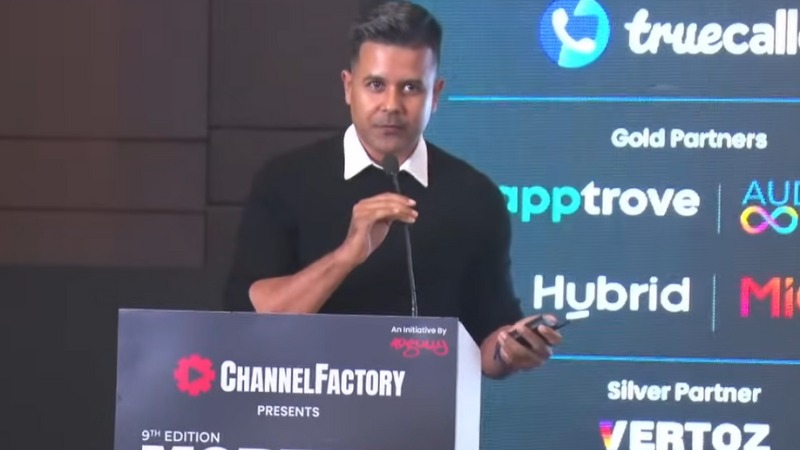
This shift took centre stage at the ninth edition of the MOBEXX Summit and Awards 2025, where leaders across marketing and technology discussed the growing attention crisis. Among the most impactful voices was Nabajit Nath, Sales Director – India at Kargo, who delivered a keynote focused on how adtech must evolve to survive.
Rather than treating attention as a by-product, Nath argued that it must become the foundation of advertising strategy.
Attention, Not Inventory, Is the Real Scarcity
For years, digital advertising has prioritised scale. Impressions, reach, and inventory volumes dominated planning conversations.
However, Nath pointed out that this approach no longer works.
While inventory continues to grow, consumer attention keeps shrinking. As a result, brands often pay more yet achieve less meaningful engagement.
At MOBEXX 2025, he framed attention decline as a structural challenge, similar to issues of data quality, media placement, and creative relevance.
Without addressing attention directly, he warned, marketers risk investing heavily in ads that audiences barely notice.
Shrinking Attention Spans Are Redefining Digital Engagement
Citing industry research, Nath highlighted a sharp decline in average attention spans.
Two decades ago, consumers could focus for nearly 12 seconds. Today, that number has dropped to under nine seconds.
In many mobile and digital environments, non-focused interactions last less than ten seconds.
This creates a narrow window for brands to communicate value, emotion, or recall.
Therefore, traditional formats that rely on passive viewing struggle to make an impact.
Why Creative Relevance Alone Is No Longer Enough
Creative relevance remains important. However, Nath emphasised that relevance alone cannot solve the attention problem.
Even strong creative fails if it appears at the wrong moment, in the wrong environment, or without visual alignment.
As a result, creative and media planning can no longer operate independently.
Instead, adtech must support context-aware delivery, where formats adapt to screen behaviour, user posture, and consumption patterns.
This is where Creative Science begins to play a critical role.
Understanding Creative Science in Advertising
Creative Science combines creativity with data, technology, and behavioural insights.
Rather than asking whether an ad looks good, it asks whether the ad earns attention.
At Kargo, this approach focuses on understanding how consumers naturally interact with screens. It analyses factors such as scroll speed, orientation, device movement, and visual focus.
By aligning creative formats with real user behaviour, brands gain a better chance of being noticed.
Consequently, attention becomes measurable rather than assumed.
Measuring Attention Instead of Counting Impressions
One of the strongest messages from Nath’s keynote focused on measurement.
Traditional metrics like impressions and viewability often fail to reflect real engagement.
An ad may technically appear on screen, yet never truly register with the viewer.
Therefore, Creative Science shifts the lens toward attention-based metrics.
These include active exposure time, interaction quality, and visual prominence.
Such metrics help marketers understand not just whether ads were served, but whether they were actually seen.
Why Adtech Must Evolve Quickly
The digital ecosystem continues to fragment across apps, platforms, and devices.
At the same time, consumer tolerance for intrusive advertising continues to decline.
Because of this, Nath stressed that adtech platforms must move beyond automation alone.
They must actively design experiences that respect user behaviour while capturing attention naturally.
This evolution requires collaboration between creative teams, media planners, and technology providers.
Without alignment, attention loss will only accelerate.
MOBEXX 2025 Highlights a Shift in Industry Thinking
The MOBEXX Summit and Awards 2025 reflected a broader shift in industry mindset.
Conversations are no longer limited to performance metrics or media efficiency.
Instead, leaders are asking deeper questions:
-
Are ads truly being noticed?
-
Are brands earning attention or interrupting it?
-
Are creative formats designed for how people actually consume content?
These discussions signal a growing recognition that attention is not infinite — and must be treated with care.
Creative Science as a Path Forward
According to Nath, Creative Science offers a practical path forward.
By blending design, technology, and behavioural insight, advertisers can build formats that feel native rather than disruptive.
This approach helps reduce waste while improving impact.
More importantly, it respects the consumer’s limited attention rather than competing aggressively for it.
In the long run, this creates healthier relationships between brands and audiences.
Redefining Success in the Attention Economy
As advertising enters the attention economy, success metrics must change.
Winning no longer means being everywhere. It means being meaningful when present.
The future of adtech will depend on its ability to adapt to how humans actually behave — not how systems assume they behave.
As Nath concluded, the brands that succeed will be those that design for attention, not just exposure.