



If you live in Bengaluru, you know two things are unavoidable: the soul-crushing traffic at Silk Board and the constant barrage of startup ads. But lately, a new color has entered the chat. It’s not the standard corporate blue or the startup green; it’s a high-voltage, electric purple.
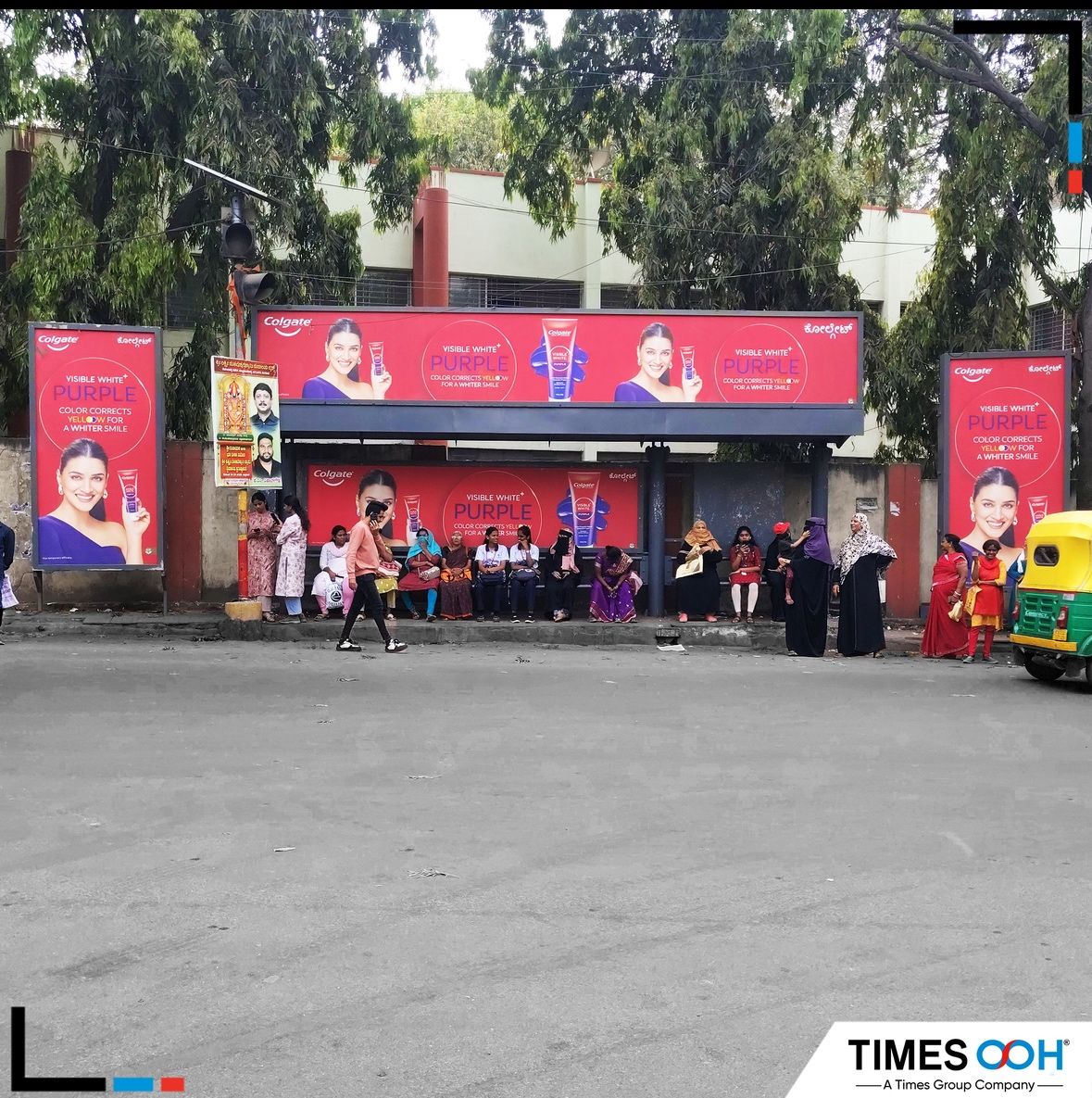
Colgate, the brand your grandmother and your Gen-Z cousin both know, has just pulled off a massive “saturation” stunt. Partnering with Times OOH, they’ve plastered their new Visible White Purple Toothpaste across 31 strategic bus shelters on the city’s busiest arterial routes.
This isn’t just another “put a poster up” campaign. It’s a calculated move to own the city’s attention. Let’s break down why this is a masterclass in modern outdoor advertising.
1. The “Traffic Trap” Advantage
In most cities, a bus shelter ad is for people waiting for the bus. In Bengaluru, a bus shelter ad is for the guy in the Audi, the woman on the Ather scooter, and the intern in the Uber all of whom are stuck at a red light for 15 minutes.
Colgate and Times OOH understood the “Dwell Time” logic perfectly. By securing 31 shelters on major routes (think ORR, Indiranagar, and Koramangala), they’ve ensured that you don’t just see the ad once; you see it every time you move 100 meters. This is High-Frequency Branding. In a world where we skip YouTube ads in 5 seconds, you can’t “skip” a 10-foot glowing purple bus stop when you’re crawling at 5 km/h.
2. Breaking the “Boring Hygiene” Stereotype
Let’s be honest: toothpaste is usually a boring purchase. You buy it because you have to. But the “New-Age” audience in Bengaluru the techies, the creators, the fashion-forward crowd—doesn’t want “cavity protection” as much as they want a “glow-up.”
The Visible White Purple product is a disruptor. It borrows from the beauty world (think color-correcting primers or purple shampoos). By using a bold purple aesthetic for a dental product, Colgate is pivoting from “Healthcare” to “Beauty & Lifestyle.” The OOH campaign reflects this. The visuals are sleek, minimalist, and very “Instagrammable.” It looks more like a launch for a premium sneaker or a high-end cosmetic than a toothpaste.
3. The Power of Physicality in a Digital Age
We are all suffering from “Digital Fatigue.” Our phones are cluttered with notifications, and our emails are a mess. There is something incredibly powerful about a physical, tangible presence in the real world.
When a brand takes over 31 major spots in a city like Bengaluru, it creates Brand Authority. It says, “We are here, we are big, and this product is important.” It builds a level of trust that a sponsored Instagram post simply can’t match. By the time a commuter gets home and opens a quick-commerce app like Zepto or Blinkit, that purple tube is already burned into their subconscious. The “Path to Purchase” becomes a straight line.
4. Why Times OOH was the Right Call
Strategy is nothing without execution. Times OOH (A Times Group Company) has the “home court advantage” in Bengaluru. They didn’t just pick random spots; they picked the arterial routes the lifelines of the city.
These 31 shelters aren’t just in the city; they are the city’s infrastructure. By choosing high-visibility, well-maintained shelters, Colgate ensures the brand looks premium. There’s a psychological link between the quality of the ad space and the perceived quality of the product. Clean, bright, and bold that’s the vibe they’re going for.
5. The “Color Theory” Gamble
In marketing, color is a shortcut to the brain. Purple is the color of royalty, luxury, and in this specific case science. Since purple neutralizes yellow (the basic science of the color wheel), the entire campaign relies on this one visual cue.
The OOH creative doesn’t use 50 words to explain the science. It uses one massive purple tube and a clear “before and after” promise. In the 3 seconds a driver looks at the shelter, they get the whole story. That is the hallmark of great outdoor creative: Simplicity.
6. Bengaluru: The Ultimate Litmus Test
Why do this in Bengaluru? Because if a “cool” lifestyle product can win here, it can win anywhere in India. The city is full of early adopters. These are the people who will try a purple toothpaste just for the “vibes” and then tell their 10,000 followers about it. By dominating the “length and breadth” of this specific city, Colgate is sparking a trend that will eventually trickle down to the rest of the country.
Conclusion
Colgate isn’t just selling toothpaste with this campaign; they are selling a “New-Age” experience. By combining high-frequency OOH with a disruptive product and a deep understanding of urban psychology, they’ve turned the Bengaluru commute into a giant showroom.
The next time you’re stuck in traffic and see that purple glow, remember: you’re not just looking at an ad. You’re looking at a brand that successfully figured out how to own your attention in the busiest city in India.