






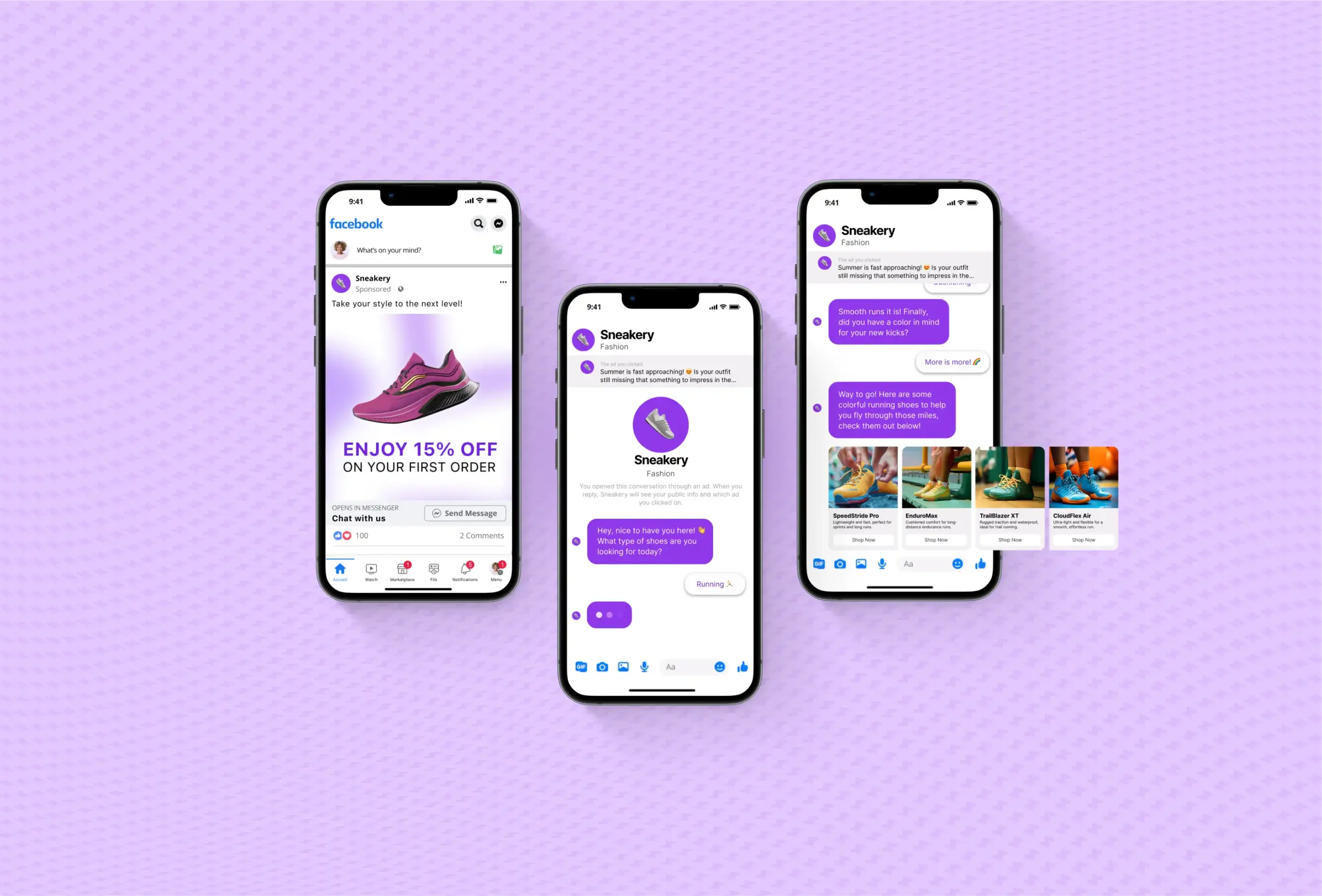
For decades, advertising has been largely one-way. Brands spoke, consumers listened—or ignored. That model is rapidly breaking down. Today, conversational advertising is redefining how brands and consumers interact by enabling real-time, two-way dialogue across platforms. The Rise of Conversational Advertising: From Chatbots to Immersive AI Touchpoints captures how conversational AI is reshaping the journey from discovery to purchase—moving far beyond static display ads.
In an age of instant messaging, voice assistants, and AI copilots, consumers no longer want to click endlessly. They want to ask, converse, and decide—in the moment.
What Is Conversational Advertising?
Conversational advertising uses AI-powered interfaces—such as chatbots, voice assistants, and messaging-based experiences—to engage users in dialogue-driven brand interactions.
Instead of pushing banners or videos, brands:
-
Answer questions in real time
-
Guide users through choices
-
Personalize recommendations instantly
-
Enable transactions within the conversation
As a result, advertising feels less like persuasion and more like assistance.
Why Conversational AI Is Rising Now
Several forces are accelerating this shift.
First, consumer behavior has changed. Messaging has become the dominant digital behavior, especially on mobile. Second, advances in large language models and natural language understanding have made conversations more human and context-aware. Third, attention fatigue has reduced the effectiveness of interruptive ad formats.
Consequently, brands are adopting conversational AI to stay relevant in how people naturally communicate.
The Rise of Conversational Advertising: From Chatbots to Immersive AI Touchpoints
Early chatbots were rule-based and transactional. Today’s conversational advertising is adaptive, contextual, and emotionally intelligent.
Modern systems understand:
-
Intent behind questions
-
Purchase readiness
-
Tone, urgency, and hesitation
For example, a consumer searching for “best budget smartphone” may be guided through a chat experience that compares models, answers doubts, offers deals, and completes checkout—without ever visiting a traditional product page.
Thus, conversation replaces the funnel.
Search Is Becoming Conversational
Search itself is evolving from keyword queries to natural language conversations.
Generative AI Platforms powered by companies like Google are integrating conversational responses directly into search experiences. Instead of ten blue links, users receive synthesized answers—and follow-up prompts.
For brands, this means visibility now depends on how well they participate in conversations, not just how they rank in listings.
Messaging Platforms as Advertising Channels
Messaging apps have become powerful conversational ad environments.
On WhatsApp, Instagram DMs, and web chat widgets, brands run click-to-chat ads that immediately open conversations.
These chats can:
-
Qualify leads
-
Share personalized offers
-
Book appointments
-
Complete purchases
As a result, the gap between ad impression and action shrinks dramatically.
Conversational Commerce: From Talk to Transaction
Conversational advertising blends seamlessly into conversational commerce.
AI assistants now help users:
-
Choose products
-
Compare prices
-
Apply coupons
-
Track orders
-
Get post-purchase support
Voice-based shopping through assistants like Amazon Alexa is further pushing this evolution. Here, discovery, decision, and purchase happen in one continuous interaction.
Therefore, conversation becomes the interface of commerce.
Personalisation at the Speed of Dialogue
One of the biggest advantages of conversational advertising is real-time personalisation.
Unlike static ads that rely on pre-set segments, conversational AI personalizes dynamically—based on what the user says right now. A hesitant response triggers reassurance. A price-sensitive question triggers offers. A comparison query triggers feature breakdowns.
This responsiveness makes advertising feel human, not automated.
From Screens to Immersive AI Touchpoints
Conversational advertising is expanding beyond text.
Brands are now experimenting with:
-
Voice-based brand assistants
-
AI avatars in apps and websites
-
Conversational agents in smart devices
-
Multilingual AI for regional markets
These immersive touchpoints create continuity across devices and moments. Whether on a phone, speaker, or kiosk, the brand “remembers” the conversation.
B2B Adoption of Conversational Advertising
Conversational advertising is not limited to consumers. B2B brands are adopting AI chat experiences to engage decision-makers.
AI assistants qualify enterprise leads, answer technical questions, share whitepapers, and book demos. Because B2B buyers prefer self-education before sales contact, conversational AI fits naturally into their journey.
As a result, brand engagement begins earlier and feels less sales-driven.
Trust, Transparency, and Ethical Design
As conversations become more powerful, trust becomes critical.
Brands must clearly disclose when users are interacting with AI. Conversations should support—not manipulate—decision-making. Over-automation or deceptive design can quickly erode confidence.
Therefore, ethical conversational design will separate trusted brands from opportunistic ones.
Industries Leading the Conversational Shift
Conversational advertising is gaining traction across:
-
E-commerce & D2C: Guided shopping journeys
-
Fintech: Financial education and onboarding
-
Travel & Hospitality: Planning and bookings
-
Healthcare: Appointment and information flows
-
Education: Course discovery and counselling
These sectors benefit because conversations reduce friction and uncertainty.
The Future: Advertising as an Ongoing Dialogue
The rise of conversational advertising signals a deeper transformation. Advertising is no longer a moment—it is a relationship.
As AI becomes more context-aware and emotionally intelligent, brand conversations will feel less scripted and more intuitive. The best brands will not just deliver messages; they will listen, respond, and adapt.
Conclusion: From Impressions to Interactions
The Rise of Conversational Advertising marks a shift from visibility to value. In a world where consumers expect immediacy and relevance, conversation is the most natural interface.
From chatbots to immersive AI touchpoints, conversational advertising transforms brand communication into something far more powerful than ads—it becomes assistance, guidance, and trust in action.
In the next era of marketing, the brands that win will not be the loudest. They will be the ones that know how to talk—and listen—best.