




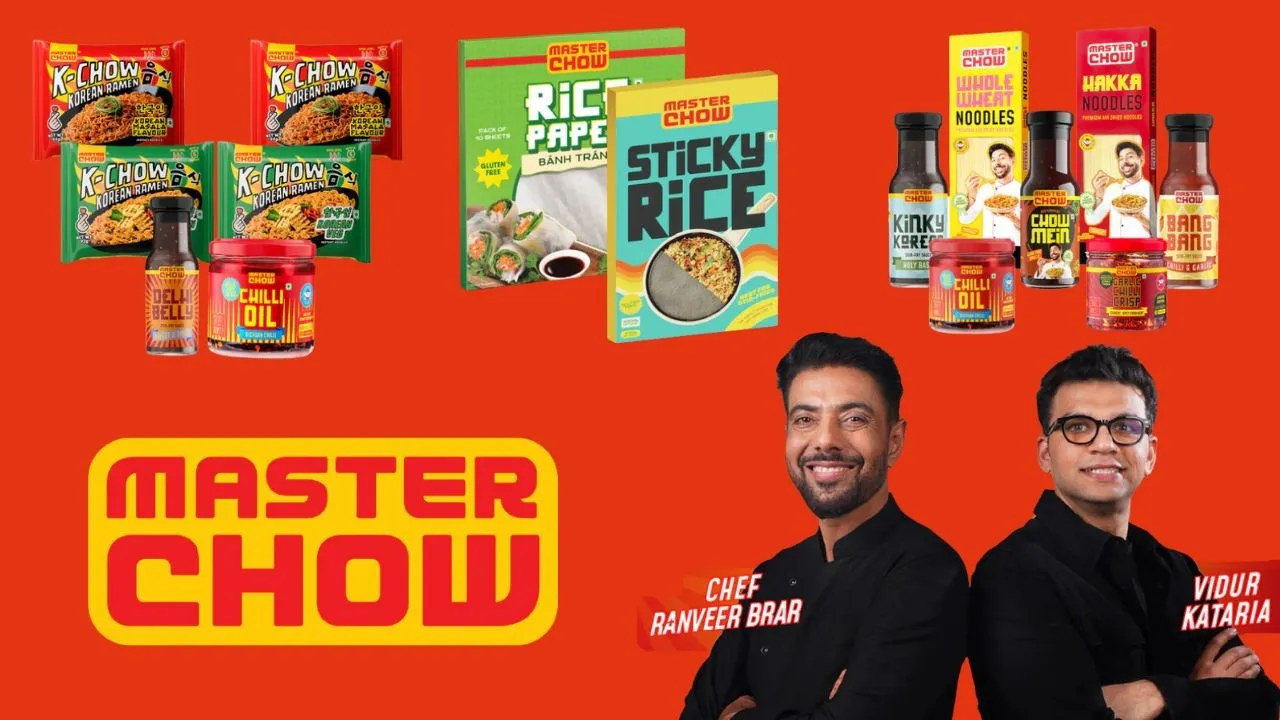
When India’s nationwide lockdown brought restaurants to a sudden halt in 2020, many food entrepreneurs faced existential uncertainty. For Vidur Kataria and Sidhanth Madan, however, that disruption became the catalyst for building one of India’s fastest-scaling pan-Asian home-cooking brands. Today, MasterChow claims over 60% market share across select pan-Asian at-home cooking categories such as chilli oil and Asian sauces, targeting consumers between 20 and 35 years old—a generation that experiments with global flavours while still prioritising convenience.
From Restaurant Insight to Consumer Opportunity
The idea behind MasterChow traces back to 2015, when the founders identified a clear gap in India’s Asian food landscape. On one end were five-star restaurants offering authentic flavours in limited portions. On the other were street-style Indo-Chinese outlets, where hygiene and ingredient quality were often compromised. There was little in between.
Drawing on extensive travel and observation, Kataria and Madan noted how Asian cuisines evolved globally by adapting to local palates without losing their essence. This insight led to the launch of Wok Me, an Asian “Subway-style” restaurant in Delhi’s Aurobindo Market, beneath Summer House. Customers could customise noodles, vegetables, and sauces, cooked live in under five minutes. Over four-and-a-half years, Wok Me expanded to six outlets and was poised for aggressive growth—until the pandemic hit.
A Pandemic Pivot That Changed Everything
When lockdowns shut restaurants overnight, the founders noticed an unexpected trend. Customers weren’t asking when Wok Me would reopen; instead, they wanted the sauces to recreate dishes at home. That demand reshaped the business.
Within seven days, the team moved from a home-based micro-factory to launching MasterChow as a consumer-facing brand focused on sauces and condiments. The logic was straightforward: in Asian cuisine, flavour is driven by the sauce. Control the sauce, and you control the dish.
Production scaled rapidly—from just 12 bottles a day at launch to nearly 20,000 bottles daily today. So far, the brand has reached over 15 lakh households across India.
Chilli Oil: A Gen Z Pantry Staple
MasterChow’s standout product is its chilli oil, contributing 20–30% of total revenue. During lockdown, a viral reel on chilli oil—amassing nearly five billion views—highlighted the condiment’s growing appeal. The brand positioned its chilli oil as a “modern-day Gen Z pickle”: slow-infused, time-intensive to make, but effortless to use.
Consumers now pair chilli oil with everyday Indian meals, even replacing traditional pickles. At tastings and brand-led events, unconventional combinations—such as chilli oil dosa—have reinforced its positioning as more than an Asian add-on. Despite competition from brands like Ching’s Secret, Veeba’s Wok Tok, Tops, Keya Foods, Yu Foods, Naagin Pantry, and Pataakha, Kataria credits MasterChow’s ingredient quality and flavour profiling for its category leadership.
Digital-First Growth, Quick Commerce at the Core
MasterChow’s expansion has been largely digital-first. About 85% of sales come from online channels, with quick commerce contributing nearly 65%. Platforms such as Blinkit, Swiggy Instamart, and Zepto have enabled rapid penetration, especially among discovery-driven consumers who prioritise availability over brand loyalty.
Marketing follows the same digital-heavy approach, combining performance-led campaigns with awareness initiatives. Recently, the brand launched its Not Mangaya, Ghar Pe Banaya campaign featuring Ranveer Brar. Offline, MasterChow focuses on tastings and education-led activations in modern and general trade, converting awareness into purchase through direct product experience.
Scale, Revenue, and What Lies Ahead
MasterChow nearly quadrupled revenue, growing 296% from ₹10.1 crore in FY23 to over ₹40 crore in FY24. The company expects to close FY26 at ₹72 crore, with an annual run rate of ₹100 crore, and is targeting ₹200 crore in revenue by December 2026. Currently present in around 8,000 offline stores, the brand aims to expand to 20,000 outlets by the end of 2026. While Tier-1 cities—especially Delhi—remain key contributors, Tier-2 markets are gaining traction via quick commerce, with deeper offline penetration planned gradually.
Looking ahead, MasterChow wants to become the default brand for Asian food at home. With Korean, Vietnamese, Thai, and pan-Asian flavours moving from niche to mainstream—driven by pop culture and social media—the brand sees future growth coming from specific, convenience-led products, rather than entire cuisines. From a lockdown-induced crisis to category leadership, MasterChow’s journey underscores how sharp consumer insight and rapid execution can turn disruption into opportunity.