





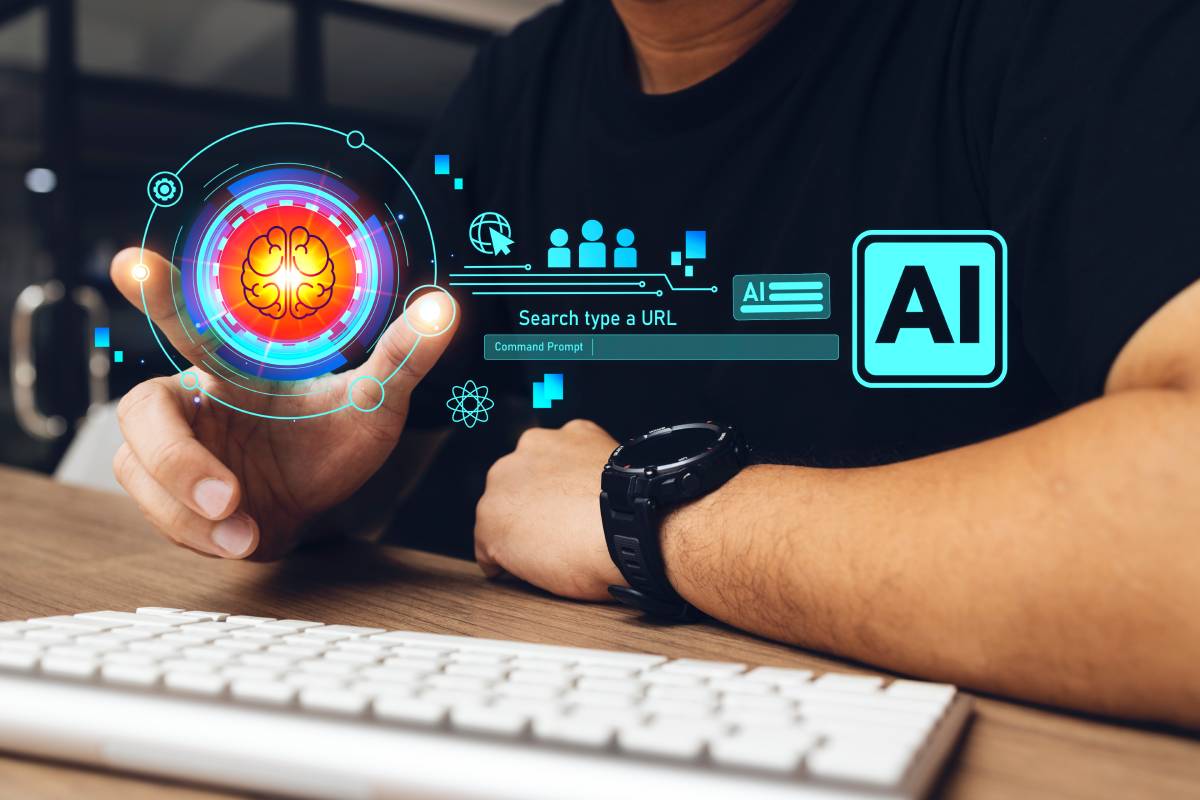
Artificial Intelligence (AI) has officially moved from being a buzzword to a strategic backbone of modern marketing. In today’s data-driven landscape, AI is redefining how advertisers create, deliver, and measure campaigns. From predictive targeting and real-time bidding to automated content creation, AI-powered advertising is enabling brands to connect with audiences more precisely and efficiently than ever before.
For marketers, this transformation represents both an opportunity and a challenge. As AI reshapes advertising ecosystems, understanding its potential — and its limitations — is essential for staying competitive.
AI-Powered Advertising: A New Era of Marketing Efficiency
1. Data Becomes the Creative Fuel
Traditional advertising often relied on assumptions and historical insights. In contrast, AI thrives on data — using billions of data points to identify behavioral patterns and predict future actions.
AI tools analyze metrics like browsing history, purchase frequency, and content engagement to create dynamic audience profiles. These insights allow marketers to deliver personalized messages in real-time.
For example, if a user frequently searches for travel deals, an AI ad system can instantly display destination-specific offers, adjusting creative and pricing dynamically.
2. Hyper-Personalization at Scale
AI allows brands to personalize campaigns at an individual level — something manual systems could never achieve. Using machine learning, algorithms segment users based on micro-behaviors, such as time spent on product pages or video completion rates.
This results in ads that feel more relevant, timely, and intuitive. A shopper browsing sneakers online might later see ads for complementary products like fitness trackers or workout gear — all powered by AI-driven contextual mapping.
3. Predictive Advertising and Real-Time Optimization
AI’s ability to analyze and act instantly is revolutionizing ad performance. Predictive algorithms can forecast which creatives, keywords, or audience segments will drive the best results, optimizing campaigns automatically.
For instance, in programmatic advertising, AI determines which ad should appear, to whom, and at what cost, within milliseconds. This automation ensures that media budgets are utilized efficiently, minimizing waste and maximizing ROI.
How AI Is Changing the Advertising Workflow
1. Smarter Creative Production
AI is now co-creating ads alongside human designers. Tools like Adobe Firefly, Canva Magic Studio, and OpenAI’s Sora can generate visuals, copy, and even video concepts in seconds.
This creative augmentation helps teams reduce turnaround time and experiment with multiple variations. Marketers can A/B test dozens of ad versions, allowing AI to identify which tone, format, or imagery resonates most with target audiences.
2. Automated Media Buying
AI-driven media buying, especially through programmatic platforms, has become the norm. Algorithms evaluate millions of bid opportunities per second and decide where an ad should appear for the highest conversion probability.
Platforms like Google DV360, The Trade Desk, and Amazon Ads use AI models to balance cost efficiency with audience precision — ensuring that advertisers get better visibility with less manual effort.
3. Voice and Visual Search Advertising
With the rise of voice assistants and visual discovery tools, AI has unlocked new search behaviors. Voice-enabled platforms like Alexa and Google Assistant now provide opportunities for voice search ads, while visual AI tools allow brands to advertise based on image recognition.
For instance, a user uploading a photo of a handbag could see related fashion brand promotions. This evolution is leading to contextual, intuitive, and visually driven ad ecosystems.
The Impact on Marketers: From Strategists to AI Collaborators
1. Shift from Manual to Strategic Roles
As AI automates repetitive tasks like keyword bidding, segmentation, and reporting, marketers can focus on strategy, storytelling, and creativity.
Instead of manually optimizing ads, they now train AI systems with data inputs, creative direction, and business goals. This shift transforms the marketer’s role from “operator” to “AI orchestrator.”
2. Need for AI Literacy
To leverage AI effectively, marketers must understand how algorithms work — and how to interpret their outputs. Knowing concepts like model bias, data drift, and attribution logic becomes critical.
Those who can combine human creativity with AI-driven insights will dominate the next generation of marketing leadership.
As industry experts often emphasize, AI doesn’t replace marketers — it amplifies them.
3. Ethical and Transparent Advertising
As AI grows more powerful, so does the responsibility to use it ethically. Over-targeting or deep personalization can raise privacy concerns among consumers.
Brands must maintain transparency in data collection and consent, ensuring users understand how their information fuels personalization. Ethical AI practices are not just about compliance — they build trust and brand loyalty in the long run.
The Benefits of AI-Powered Advertising
1. Higher Efficiency and Cost Control
AI removes guesswork from advertising. By continuously analyzing data, it optimizes campaigns to minimize CPC (Cost per Click) and maximize ROI. This precision helps reduce wasted ad spend and improve budget allocation across channels.
2. Enhanced Customer Experience
AI creates seamless, omnichannel experiences. From personalized push notifications to predictive product recommendations, brands can engage users with content that matches their needs at every step of the customer journey.
3. Measurable, Real-Time Insights
Marketers no longer wait for post-campaign reports. AI provides live performance dashboards that highlight what’s working — and what isn’t — allowing for on-the-fly adjustments that improve campaign results instantly.
4. Competitive Advantage
Brands that adopt AI early gain a first-mover advantage. They reach audiences faster, personalize better, and measure results more accurately — creating a virtuous cycle of growth powered by automation and insight.
Challenges in AI Advertising
1. Data Privacy Regulations
With stricter data laws like GDPR and India’s Digital Personal Data Protection Act, advertisers must handle user data responsibly. AI systems need to comply with consent-based targeting to avoid legal and ethical risks.
2. Algorithmic Bias
AI systems can sometimes reflect bias if trained on incomplete or skewed data. This may lead to unequal ad distribution or misleading optimization. Human oversight remains essential to ensure fairness and inclusivity in targeting.
3. Dependence on Platform Ecosystems
Many AI-driven ad systems are proprietary — controlled by large platforms like Google or Meta. This limits transparency in how decisions are made, leading to concerns over data control and attribution clarity.
What the Future Holds for AI Advertising
The next wave of AI advertising will be powered by Agentic AI — autonomous agents capable of planning, buying, and optimizing entire campaigns without human intervention. These systems will use reinforcement learning to improve continuously, combining creativity and analytics at scale.
Moreover, generative AI will evolve beyond visuals to full ad storytelling — creating custom audio-visual ads for each viewer based on behavior, emotion, and context.
As brands and agencies integrate these technologies, AI will not just automate advertising — it will personalize it at the level of human conversation.
Conclusion
AI-powered advertising is redefining what it means to be a marketer in the digital age. By merging human creativity with machine intelligence, brands can achieve precision, personalization, and performance that were unimaginable a decade ago.
However, the success of AI advertising depends on balance — between automation and authenticity, data and empathy, efficiency and ethics.
Marketers who embrace this balance will not only stay ahead of the curve but will also shape the future of intelligent advertising in India and beyond.